
A federal appeals court has rejected how health care payers calculate their qualifying payment amount, or QPA, when addressing disputed payments under the No Surprises Act’s Independent Dispute Resolution process.
The QPA is the central benchmark rate payers present to help settle out-of-network medical billing disagreements that for years led to surprise medical bills for many hospital patients.
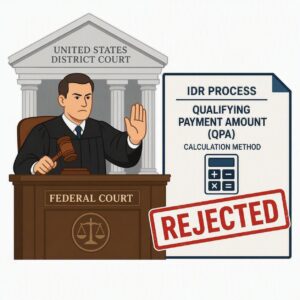 The court concluded that payers should not be permitted to include so-called ghost rates when calculating their QPA; a ghost rate is a rate for services that a given provider does not actually provide, leaving the provider no incentive to attempt to negotiate that rate and, until now, freeing payers to establish contract rates for such services as low as one dollar, thereby skewing insurers’ calculation of the QPAs they present as the basis for their negotiating position in the IDR process.
Despite the advantage that the now-discredited QPA calculation methodology gave insurers, providers were still winning the vast majority of cases decided through the IDR process.
The case was brought by the Texas Medical Association and others and decided by a federal appeals court in that state. The court’s ruling vacates the current process through which payers calculate their QPAs. The ruling addresses other aspects of the IDR as well.
Learn more about the decision from the court’s opinion in the case and the Healthcare Dive article “5th Circuit strikes down No Surprises billing benchmark in win for providers.”