
Don’t Miss:
- CMS partners with 37 states to launch Medicaid quality initiative
- CMS fleshes out GLOBE Model
- Medicare Part D Claims Data 340B Repository goes live
The following is the latest health policy news from the federal government for September 25 – October 1. Some of the language used below is taken directly from government documents.
The White House
 A statement issued by the White House titled “President Trump Takes Historic Action to Eliminate Wasteful and Harmful Spending” includes a series of cuts, or rescissions, of health-related federal expenditures, including $567 million for taxpayer-funded HHS services for non-citizens; $28 million for HHS research programs; and $5 million from HHS’s Office of Minority Health. Learn more from this White House release and the White House rescission letter to House Speaker Johnson.
- In response to this rescission, the Government Accountability Office (GAO) has written to congressional leaders to inform them that “GAO has previously concluded that the ICA [Congressional Budget and Impoundment Control Act of 1974] does not permit the withholding of funds past their date of expiration, even if the period for congressional consideration has not fully elapsed” and that “As a result, the rescission proposals contained in the President’s September 25, 2026 special message to Congress do not permit the President to withhold the appropriations beyond the end of fiscal year 2026.” Find that GAO letter here.
- The White House has issued an executive order directing the creation of America.gov as “the unified digital front door” to the federal government for anyone seeking federal information or services. The White House calls for America.gov to be a secure, intelligent, and service-oriented point of entry through which an individual may sign in, communicate in plain language, receive accurate answers, and, where authorized and technically available, complete government transactions without being required to navigate the websites of multiple agencies. Learn more about America.gov from this White House executive order, this White House fact sheet, and the America.gov web site itself.
 Congress
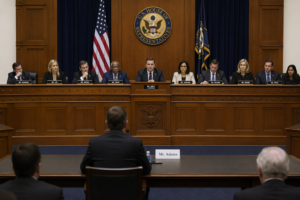
- The House Energy & Commerce Committee released a 14-bill health care package: nine new bills and five that lawmakers previously introduced. Collectively, it aims to streamline data collection and availability, bolster anti-fraud enforcement infrastructure, and create incentives for fighting fraud. For a full list of bills, see this committee press release.
- The committee also released a majority staff report for the 119th Congress titled “The Real Costs of Fraud: Examining Program Integrity Requirements and Exposing Fraud in Medicare and Medicaid,” outlining 13 investigative findings and 37 recommendations to address program integrity. See the report here.
- The Senate Health, Education, Labor and Pensions (HELP) Committee voted to confirm along party lines the following Department of Health and Human Services nominations: Nicole Saphier to be Medical Director in the Regular Corps of the Public Health Service; Timothy Westlake to be Assistant Secretary for Mental Health and Substance Use (within SAMHSA, the Substance Abuse and Mental Health Services Administration); and Mary Lazare to be Assistant Secretary for Aging. The nominations now head to the full Senate for final confirmation. See the chairman’s statement here and a recording of the session here.
- Only the Senate was in session this week and it recessed on Wednesday. Both chambers of Congress will reconvene after the mid-term elections in November. Upon their return, a major priority will be advancing a government funding package because the current continuing resolution (CR) expires on December 11. Many members also hope to address health care priorities during the lame duck session.
Medicaid Community Engagement Requirements and Patient SUD Data
HHS’s Office of Civil Rights has issued guidance about the confidentiality of the medical records of patients with substance use disorders (SUDs) and their potential exclusion from the community engagement criteria for Medicaid eligibility that took effect on October 1. The guidance clarifies when state Medicaid agencies can use such protected confidential information to determine whether an applicant should be exempt from the community engagement requirement. Find that guidance here.
CMS Finalizes GLOBE Model
 CMS has finalized a new drug payment model to address the high cost of drugs in Original Medicare Part B. The Global Benchmark for Efficient Drug Pricing (GLOBE) Model will test whether a new rebate formula for certain drugs in the Medicare Part B Drug Inflation Rebate Program reduces costs for Original Medicare beneficiaries and the Medicare program while preserving quality of care. The GLOBE Model will use an alternative method for calculating Medicare Part B drug inflation rebate amounts for certain separately payable Medicare Part B drugs and biological products. The model will test an alternative approach to the Original Medicare Part B drug inflation rebate calculation for selected drugs using international drug pricing information to identify a benchmark that reflects prices paid in a set of economically comparable countries.
The GLOBE Model will operate for five years beginning on January 1, 2027. The model will apply to Medicare beneficiaries who reside in a randomly selected subset of geographic areas encompassing approximately 25 percent of total Medicare beneficiaries who have Original Medicare as their primary coverage. The selected areas will be announced by January 1, 2027 and reduced co-insurance amounts will take effect on April 1, 2027. Learn more about the GLOBE Model from this CMS news release and from the GLOBE Model web page.
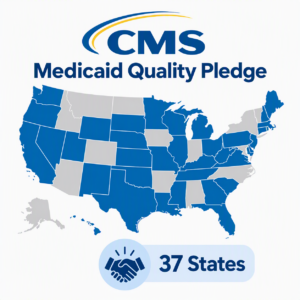 CMS, 37 States Launch Joint Medicaid Quality Initiative
CMS is launching an initiative with a founding group of 37 states to focus on how quality is measured in Medicaid and the Children’s Health Insurance Program (CHIP). This effort will put health outcomes at the center of how success is defined, with CMS and the states to prioritize measures that demonstrate meaningful improvements in prevention, chronic disease management, and behavioral health. The new effort will be built around four principles:
- Prioritize health outcomes over process, with a focus on prevention, chronic disease management, and behavioral health.
- Streamline quality measure inventories to reduce burden without sacrificing accountability.
- Advance digital quality measurement using near-real-time data instead of claims and chart abstraction where feasible.
- Align financial accountability with outcomes-oriented measures.
Participating states are committing to using these principles to develop targets for health outcomes and identify opportunities to incorporate outcomes-oriented measures into state quality strategies and upcoming procurements.
Learn more about the program from this CMS news release and the program’s web page, which includes a map showing the participating states.
Centers for Medicare & Medicaid Services (CMS)
 The Medicare Part D Claims Data 340B Repository is now live and available for voluntary data submissions. The 340B repository enables covered entities, third-party administrators, and other participants in 340B transactions to submit certain data elements from Part D 340B claims directly to CMS under the Part D Drug Inflation Rebate Program. The proposed 2027 Medicare physician fee schedule rule, not yet finalized, would make such data submissions mandatory beginning on January 1. Learn more from this CMS notice and find the 340B data repository here.
- Weighted average Medicare premiums will fall more than 16 percent from 2026 to 2027, average prescription drug premiums in Medicare Advantage will decline 38 percent, and average premiums for stand-alone Part D prescription drug plans will rise less than $1 a month in 2027, CMS has projected. More than 99 percent of Medicare beneficiaries will have access to at least one Medicare Advantage plan while 97 percent will have access to 10 or more options, according to the agency. The weighted average monthly premium across all Medicare Advantage plans, including plans with prescription drug coverage and Special Needs Plans, is projected to decrease from $14.37 in 2026 to $12.00 in 2027 while supplemental benefit offerings, including hearing, dental, and vision benefits, are expected to remain stable. Eighty-eight percent of non-low-income beneficiaries should have access to a basic Part D plan that is $10.30 or less and 93 percent will have access to an enhanced Part D plan for less than $6. Learn more about CMS’s projections for Medicare Advantage plan costs and coverage from this CMS news release.
- CMS has sent an informational bulletin to the states providing updates for values of the factors included in the funding methodology published in the “Basic Health Program; Federal Funding Methodology for Program Year 2023” final rule as modified by the “Notice of Benefit and Payment Parameters for 2026; and Basic Health Program” final rule. CMS has determined that updates to the overall funding methodology for 2027 are not needed and will continue to use the methodology published in the 2023 Basic Health Final Rule, as modified by the 2026 Payment Notice. Learn more from the complete CMS bulletin to the states.
- CMS has sent a memo to states addressing the national implementation of its risk-based survey for skilled nursing facilities; the new memo updates a similar communication from CMS to the states in July. CMS will use the survey to identify high-performing nursing homes so that states can inspect such facilities less frequently and devote greater attention to investigating complaints and examining the performance of higher-risk facilities. Higher-performing facilities also will receive a special icon designating that status on the Nursing Home Compare web site. Learn more from CMS’s memo to the states.
- CMS will expand the Review Choice Demonstration for Inpatient Rehabilitation Facility (IRF) Services to all IRFs that bill MAC Jurisdiction J – generally, in Alabama, Georgia, and Tennessee – beginning on January 1, 2027; currently, the program is limited to facilities in Alabama, California, Pennsylvania, and Texas. IRF providers can make their review choice selection of either 100 percent pre-claim review or 100 percent post-payment. Learn more from this CMS announcement (and by scrolling down to “Update 9/25/2026”).
- CMS has released the final evaluation report of its Comprehensive Care for Joint Replacement (CJR) Model showing that the program generated $180 million in Medicare savings while preserving care quality for lower extremity joint replacements. CMS and its Center for Medicare and Medicaid Innovation have already announced the nationwide expansion of the model and will launch the mandatory CJR Expanded (CJR-X) Model in 2028. Learn more from this CMS announcement, which includes links to the final evaluation report and other information about the program.
 A contractor hired by CMS to develop coronary artery disease episode-based cost measures is seeking individuals to participate on a technical expert panel to advise the contractor and provide clinical input on each aspect of the specifications of coronary artery disease episode-based cost measures. Learn more about the qualifications CMS seeks among potential workgroup members, the schedule for workgroup meetings, the time commitment involved, and how to apply to participate by going here and scrolling down to the link for “Physician Cost Measures and Patient Relationship Codes.” The deadline for submitting applications to participate is October 23.
- CMS has published corrections of its final rules governing several Medicare prospective payment systems for FY 2027. These corrections address technical, typographical, and various data errors. Find the published corrections for the inpatient payment system here, for the inpatient rehabilitation facilities system here, for the skilled nursing facility system here, for the inpatient psychiatric facilities system here, and for the hospice system here.
- CMS has posted a notice of its intent to re-establish a matching program between CMS and the Do Not Pay Working System, which is administered by the Treasury Department. The Do Not Pay Working System is a centralized federal portal to screen potential payees and prevent improper or fraudulent payments. Learn more from this CMS notice. The deadline for submitting comments is October 26 and CMS anticipates implementing the program shortly thereafter.
- CMS has asked OMB for permission to modify generic data collection for five different data collection programs, with “generic” in this context meaning that the data in the collections is “…usually voluntary, low-burden, and uncontroversial collections” and “do not raise any substantive or policy issues, and do not require policy or methodological review.” The five data collection programs for which CMS seeks this permission are:
- Model Application Template and Instructions for State Child Health Plan Under Title XXI of the Social Security Act, State Children’s Health Insurance Program
- Medicaid Managed Care Rate Development Guide
- Sex-Rejecting Procedures Medicaid State Plan Amendment Template
- Medicaid Emergency Response Templates
- Medicaid Prior Authorization Assurances State Plan Amendment Template
Learn more about the review process for generic data collections and the specific collections that CMS seeks to modify in this CMS notice. The deadline for submitting comments is October 9.
- CMS’s Hospital Quality Reporting Program (HQR) system is now accepting electronic clinical quality measures (eCQM) data for the CY 2026 reporting period. The HQR system accepts Quality Reporting Document Architecture (QRDA) Category I test and production files using CY 2026 requirements. The deadline for submitting this data is March 1, 2027. Learn more about this data reporting from this CMS notice.
- CMS has published addenda to three eCQMs for the 2027 reporting/performance period through the new eCQM addendum process. Updated specifications for each measure and updated supporting documentation have been posted to the eCQI Resource Center. Learn more from about the three addenda from this CMS announcement.
- CMS has added the following items to its Quality Payment Program resource library: (Note: clicking these links may download a zip file.)
 Department of Health and Human Services (HHS)
- HHS’s Health Resources and Services Administration (HRSA) has awarded $89.3 million in grants through its Rural Communities Opioid Response Program (RCORP) to expand access to substance use disorder prevention, treatment, and recovery services in rural communities. These grants will support rural communities in 45 states and help people obtain treatment and the support they need for long-term recovery. Learn more about the individual programs through which the funding has been awarded and find links to lists of grant recipients in this HRSA news release.
- HHS’s Substance Abuse and Mental Health Services Administration (SAMHSA) has awarded $247.9 million in grants to expand access to addiction treatment, mental health services, and recovery support in communities across the country. The grants seek to strengthen mental health support in schools, expand trauma treatment for children and families, equip first responders and communities to reverse overdoses, and help people in recovery return to work and rebuild their lives. Learn more about the ten different programs through which the funds have been awarded and find links to list of the grant recipients for each program from this HHS news release.
- HHS and its Advanced Research Projects Agency for Health (ARPA-H) have launched a new effort to transform how clinical trials are designed and conducted using advanced computational models, real-time analysis, shared infrastructure, and automation to evaluate drugs and biologics faster, at lower cost, and with fewer participants. The new Simulation-augmented, Real-time Platform Adaptive Seamless Trials (SURPASS) program, together with three complementary projects also introduced, seeks to remove barriers that slow clinical development and help promising treatments reach patients sooner. Learn more about this new approach, and the three new complementary projects, from this HHS news release.
- HHS, the CDC, and the NIH have announced a new research initiative to address how the nation combats ticks and tickborne diseases, including Lyme disease and alpha-gal syndrome. The CDC and NIH have awarded nearly $3 million to two CDC Centers of Excellence in Vector-Borne Diseases to research innovative approaches for reducing tick populations. Learn more about the specific challenges the new funding is expected to address and the funding awarded to address them from this HHS news release.
- HHS’s Office of the Assistant Secretary for Planning and Evaluation has posted the agenda and other materials associated with the September 14-15 meeting of its Physician-Focused Payment Model Technical Advisory Committee (PTAC). The primary objective of the meeting was to receive stakeholder input on the committee’s draft white paper “Transforming Health Care Delivery Through Value-Based Payment Models and Care: A Roadmap,” which presents a plan for advancing the development and implementation of Alternative Payment Models (APMs) that support the transformation of the U.S. health care system toward high-value, patient-centered care. Learn more about the meeting by going here and scrolling down to “Past 2026 Meetings – September 14-15, 2026.” Also, go here to see seven videos presenting the meetings’ discussions and recommendations.
- HRSA has asked OMB for permission to revise its data collection instrument “National Marrow Donor Program Patient Support Center Survey.” Learn more about the specific revisions HRSA seeks from this formal notice. This notice also was published in July and the deadline for submitting comments is October 29.
- HRSA has published revised Living Organ Donation Reimbursement Program guidelines. The proposed guidelines were published in July. Learn more about the comments submitted at that time and HRSA’s response to them from this formal notice. The new guidelines apply to all applications under the program reviewed on or after September 30.
- HHS has published a notice revising and restating the statement of organization, functions, and delegations of authority for its Office of the General Counsel. Find the notice here.
 Rural Health Transformation Program Funding
In the past week CMS has announced that it has awarded Rural Health Transformation Program money to the following states:
- To Alabama, $55 million to expand rural maternal and emergency care, cancer screening, and the state’s rural health care workforce
- To Colorado, $169 million to expand specialty care, strengthen emergency services, and bring blood transfusion services closer to patients
- To Montana, $8.7 million for new ambulances and medical equipment upgrades across the state
- To North Carolina, $20 million to expand telehealth access and upgrade health care technology in rural areas
- To Texas, $51 million for rural nutrition and chronic disease prevention programs
Medicaid State Plan Amendments
CMS has approved state plan amendments for Medicaid and CHIP programs for the following states:
 Arizona, updating FQHC and Rural Health Clinic plan benefits
- California, updating selected per diem rates for acute psychiatric hospitals
- Hawaii, permitting the state to enter into rate agreements with drug manufacturers for drugs provided to Medicaid patients
- Indiana, updating the methodology for calculating supplemental payments
- Maryland, updating targeted case management services
- Wisconsin, removing supplemental DSH payments and making changes in rural critical care supplemental payments criteria
- Wyoming, limiting federal financial participation for Medicaid to selected citizenship and resident groups
Medicaid State Waiver Approvals
CMS has approved state Medicaid waivers for:
- Louisiana, section 1115 reentry demonstration
- Minnesota, section 1115 reentry demonstration
- Nevada, section 1115 reentry demonstration
- Utah, section 1115 traditional healing demonstration
Health Policy Newsletters, Reports, and Videos
 CMS
CMS
- MLN Connects – October 1
- LTCH Quality Reporting Program – annual payment update compliance essentials training course
- CMS Center for Clinical Standards of Quality – CCSQ Data and Analytics Townhall – video of September 23 town hall webinar
- “AHEAD Hospital Global Budgets: Strategic Considerations & Medicare FFS Methodology Updates” – video of September 22 webinar
- HHS
- Health Resources and Services Administration (HRSA) – eNews – September 24 newsletter
- HRSA/Organ Transplantation and Procurement Network
-
- “Informational Webinar on DCD (Donation After Circulatory Death) Policy Implementation” – video of September 21 webinar
- Modernization Update – September 2026
-
- Office of the Inspector General (OIG)
-
-
- “This Week at OIG” video – September 25
- “Many Independent Organ Procurement Organizations Did Not Meet Medicare Requirements for Reporting Kidney Transportation Costs and Some Did Not Transport Organs in Accordance With Medicare Requirements” – September 28 report
- “Tennessee Claimed Federal Medicaid Reimbursement for Millions of Dollars in Targeted Case Management Services That Did Not Comply With Federal and State Requirements” – September report
- “Medicare Advantage Organizations and Prescription Drug Plans Paid $72 Million During a 3-Year Period for Services Associated With Excluded Providers or Individuals Convicted of Certain Felonies” – September 28 report
- Administration for Strategic Preparedness and Response (ASPR) – “The Express” – September newsletter
-
- Government Accountability Office (GAO)
- “Private Health Insurance: Federal and State Oversight of Contraceptive Coverage Requirements” – September 24 report
- “VA Health Care: Action Needed to Improve Fertility Care Communications and Eligibility Determination Process” – September 29 report
- “VA Health Care: Prevalence Information Needed to Better Understand and Address Harassment Involving Veterans” – September 30 report
- “Public Health Preparedness: Action Needed to Address National and Biosecurity Risks Associated with Disposal of Federal Laboratory Equipment” – report released October 1
- Congressional Research Service – “U.S. Measles Outbreaks 2025-2026: Overview and Issues for Congress” – September 29 report
Food and Drug Administration (FDA)
The FDA has published two notices seeking nominations for voting members of scientific and technical advisory committees and individuals and consumer organizations to represent the voice of the public on those committees. To receive consideration for current and near-term vacancies, nominations for consumer representative positions should be submitted no later than November 15 and nominations for scientific, technical, professional, and other voting-member positions should be submitted no later than November 30. For more information, see the press release here, the FDA’s nomination application portal here, the voting member notice here, and the individual and consumer organization notice here.
National Institutes of Health (NIH)
 The NIH has launched “Linked Discoveries,” an experimental tool designed to help scientists more easily see how an individual research finding relates to the larger body of biomedical evidence. From a citation in PubMed, the free search engine and database maintained by the NIH’s National Library of Medicine, users can use the Linked Discoveries tool to explore a “neighborhood” of publications closely related to that article, including replication studies. Learn more from this NIH news release.
Medicaid and CHIP Payment and Access Commission (MACPAC)
Members of the Medicaid and CHIP Payment and Access Commission met publicly last week in Washington, D.C. During these deliberations, MACPAC’s staff made the following presentations:
- Community Engagement Requirements in Medicaid: Interim Final Rule and Monitoring Framework
- Panel on Community Engagement Requirements: Key Interim Final Rule Provisions
- State Directed Payment and Provider Tax Proposed Rule
- Inpatient Hospital Payment Index: Comparison Across States
- Utilization Management for Medications for Opioid Use Disorder (MOUD) in Medicaid
- Children and Youth in Foster Care Enrolled in Medicaid Managed Care
- Ensuring Health and Welfare in Self-Directed Home- and Community-Based Services: Findings and Policy Option
- Medicaid Coverage of Assistive Technology for Adults: Data Analysis and Stakeholder Interviews
Go here for links to these presentations and MACPAC’s own summary of the two days of public meetings.
Stakeholder Events
 MedPAC – Commissioners Meeting – October 8-9
MedPAC’s commissioners will hold their next public meeting virtually on Thursday, October 8 and Friday, October 9. An agenda for the meeting and information about how to participate have not yet been posted; when they are, they will be found here.
MACPAC – Commissioners Meeting – October 29-30
MACPAC’s commissioners will hold their next public meeting on Thursday, October 29 and Friday, October 30. An agenda for the meeting and information about how to participate have not yet been posted; when they are, they will be posted here.
CMS – Healthcare Common Procedure Coding System (HCPCS) Level II Public Meeting – November 11-12
CMS will hold its second biannual Healthcare Common Procedure Coding System (HCPCS) Level II public meeting of 2026 on Monday, November 2 and Tuesday, November 3 (if necessary) to discuss the CMS preliminary coding, Medicare benefit category, and Medicare payment determinations, if applicable, for new revisions to the HCPCS Level II code set for non-drug and non-biological items and services. Find the meeting’s agenda and learn more about how to speak at the conference, submit comments, and register to participate either virtually or in person in this CMS announcement.
CMS – 2026 CMS National Provider Enrollment Conference – November 18-19
CMS will hold a national provider enrollment conference on Wednesday, November 18 and Thursday, November 19 in Kissimmee, Florida. The event will provide direct access to the staff responsible for shaping and administering Medicare provider enrollment. Through keynote presentations, panel discussions, interactive Q&A sessions, and expert-led training, participants will gain insight into enrollment policy, program integrity initiatives, compliance requirements, operationally friendly best practices, and upcoming changes affecting the Medicare provider enrollment landscape. Learn more from this CMS conference notice.
HHS/Office of the Assistant Secretary for Planning and Evaluation – Physician-Focused Payment Model Technical Advisory Committee Meeting – December 8-9
HHS’s Physician-Focused Payment Model Technical Advisory Committee (PTAC) will hold a public meeting on Tuesday, December 8 and Wednesday, December 9 at 9:00 (eastern). An agenda has not yet been posted. Go here to learn more about the meeting and how to participate in person or virtually.