
Don’t Miss:
- Latest 340B developments
- CMS penalizes majority of hospitals for failing to meet Readmissions Reduction Program standards
- FTC reminds hospitals of price transparency requirements
The following is the latest health policy news from the federal government for October 2-8. Some of the language used below is taken directly from government documents.
The White House
The White House announced that the federal government will make one-time payments of $90 per person to more than 20 million Medicare enrollees – about one-third of Medicare participants – to help them pay their Medicare Part B premiums. Most eligible seniors will receive the payment in the form of a direct deposit in early October and those without direct deposit will receive a check, also sent in early October, to the mailing address they have registered with Medicare. Learn more from this White House fact sheet and this CMS FAQ.
Congress
Both chambers of Congress will reconvene after the mid-term elections in November. Upon their return, one of their priorities will be advancing a government funding package because the current continuing resolution (CR) expires on December 11.
 340B
340B
- HHS’s Health Resources and Services Administration (HRSA) has updated the list of drug companies that will participate in its 340B Rebate Model Pilot Program. In that program, participating drug companies will pay rebates to institutional purchasers of 340B-covered drugs instead of giving those purchasers up-front discounts, which has been the practice since the 340B program’s launch in 1992. Find a list of the drug companies that will participate in the model and the specific drugs that will be included in the model on the 340B Rebate Model Pilot Program web page.
- HHS’s Office of the Assistant Secretary for Planning and Evaluation (ASPE) has published the new report “Mission vs. Margin: Misaligned Incentives in the 340B Drug Pricing Program.” Find it here.
- In a commentary published on the STAT web site, HHS’s chief economist and chief regulatory officer writes about how the agency is attempting to address what it believes to be flaws in the 340B program, including Medicare patients owing more in coinsurance than providers pay for their drugs and financial rewards the agency believes hospitals receive for using more and costlier drugs. Learn more from the commentary “How CMS plans to fix a major flaw in the 340B drug discount program.”
No Surprises Act/Independent Dispute Resolution Process
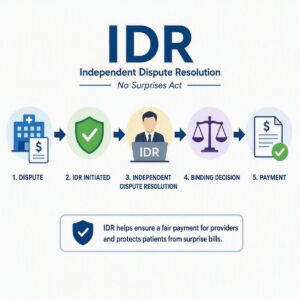 CMS has posted information about how its planned IDR Gateway, scheduled for launch on November 1 as an upgraded tool for addressing disputes between health care providers and payers, will use a new approach to addressing batched disputes under federal Independent Dispute Resolution (IDR) regulations. Find that new information here.
- Last week CMS convened leaders from across the federal government and from certified IDR entities to discuss issues affecting the federal IDR process. HHS and CMS officials met with representatives from all certified IDR entities to address the increasingly high IDR-associated costs affecting the health care system. Since it began in April of 2022, the IDR process has received and closed more than seven million disputes, far exceeding expectations. and has encountered delays and unexpected costs along the way. As the process has evolved, users of the IDR process have raised concerns about ineligible disputes, unclear IDR entity determination rationales, and delayed payment or non-payment after certified IDR entity determinations. CMS convened the certified IDR entities to gain additional insights into these trends. Learn more about the gathering and find a list of the participants in this CMS news release.
Centers for Medicare & Medicaid Services (CMS)
 CMS has penalized more than 2300 hospitals for failing to meet its standards under its Medicare Hospital Readmissions Reduction Program for FY 2027 – about 80 percent of the hospitals covered by the program. The penalties range from one percent to three percent of Medicare payments in the coming year and apply only to traditional Medicare fee-for-service payments and not to Medicare Advantage payments. Learn more from CMS’s “FY 2027 IPPS Final Rule Home Page” and scrolling down to and clicking the links for “Hospital Readmissions Reduction Program Supplemental Data File” and “Table 15: FY 2027 Hospital Readmissions Reduction Program Payment Adjustment Factors,” both of which automatically download a zip file.
- CMS has posted a list of the hospitals that will be mandatory participants in its Comprehensive Joint Replacement Expanded Model – the CJR-X Model. The CJR-X Model is a mandatory, nationwide program that will require most acute-care hospitals to assume financial responsibility for the quality and cost of lower extremity joint replacements beginning on January 1, 2028. Under this program, participating hospitals will manage and coordinate patient care for original Medicare beneficiaries from the time of their surgery through the first 90 days of post-discharge recovery, including outpatient and at-home rehabilitation. Go here and hit the link for “CJR-X Participant List” to prompt an automatic download of an Excel spreadsheet with a list of the participating hospitals. The model’s web page also links a point of contact for further information; find that web page here.
- CMS has sent a memo to state Medicaid directors presenting guidance on a new state option to add Certified Community Behavioral Health Clinic services to Medicaid state plans, as authorized by the Consolidated Appropriations Act of 2024. The memo details how states can structure such endeavors. Learn more from this memo from CMS to state Medicaid directors.
- CMS has asked OMB for permission to revise the currently approved data collection instrument titled “Transformed – Medicaid Statistical Information System (T-MSIS).” The data reported in T-MSIS is used by federal, state, and local officials, private researchers, and corporations to monitor past and projected future trends in the Medicaid and CHIP programs. The data provides the only national level information available on enrollees, beneficiaries, expenditures, and Medicaid utilization and is the basis for analyses and for cost savings estimates for HHS’s cost-sharing legislative initiatives with Congress and for actuarial forecasts. CMS seeks to update the collection to reflect changes in state Medicaid and CHIP eligibility determination processes and to support compliance, program oversight, and proper claims for federal matching funds as a result of changes introduced in the FY 2025 budget reconciliation bill – H.R. 1 – that limit the ability of states to draw down those federal Medicaid funds, with limited exceptions, to U.S. citizens and U.S. nationals, lawful permanent residents, Cuban/Haitian entrants, and Compact of Free Association migrants who are collectively referred to as “FFP-eligible noncitizens.” Another proposed change would be the addition of a new data element for per-member-per-month home health service payments. Learn more about the data element changes CMS seeks in this formal notice. The deadline for stakeholders to submit comments is November 6.
- CMS has asked OMB for permission to revise an existing data collection instrument titled “Medicare Health Outcomes Survey,” which is a longitudinal patient-reported outcome measure that assesses self-reported beneficiary quality of life and daily functioning. The data this survey collects enables CMS to continue to assess the health of the Medicare Advantage population. Learn more about the proposed changes in the Medicare Health Outcomes Survey from this CMS notice. The deadline for submitting comments is December 4.
- CMS has published a final rule governing the transparency of data about health insurance, altering some requirements established in its 2020 rule. The new rule requires a reduction in the number and size of machine-readable files; improved standardization, accuracy, and accessibility of the in-network rate and out-of-network allowed amount machine readable files; and making data easier to locate through more accessible plain text files with clearer labels and instructions on how to find additional assistance. The rule requires insurers to provide consumers with personalized cost-sharing information by phone in addition to existing online tools. It also calls for written attestation of the completeness and accuracy of posted data by “…the hospital chief executive officer, president, or senior official designated to oversee the encoding of true, accurate, and complete data.” This rule takes effect on December 7. Deadlines for implementing individual aspects of the new rule range from January 1, 2027 to July of 2028. Learn more from this CMS news release, this CMS fact sheet, this HHS video presentation, and the final rule itself.
- CMS has posted a revised bulletin presenting its October 2026 update of changes in its Medicare FY 2027 inpatient prospective payment system and long-term-care hospital prospective payment system. For the inpatient prospective payment system, the bulletin addresses FY 2027 rates and factors; Medicare MS-DRGs grouper and Medicare code editor changes; post-acute transfer and special payment policy; Medicare disproportionate share (Medicare DSH) uncompensated care payments; labor-related share percentages; updates of provider-specific files for wage index, reclassifications, and redesignations and wage index changes; multi-campus hospitals; outlier payments; and more. For the long-term-care hospital payment system, the bulletin addresses FY 2027 rates and factors; discharge payment percentages; wage indexes; and more. Learn more from this CMS bulletin. The changes it presents took effect on October 1.
 CMS has posted a bulletin presenting its October 2026 update of the Medicare hospital outpatient prospective payment system. The changes include CPT proprietary laboratory analyses coding changes; new Category III CPT and HCPCS codes; ambulatory payment classification (APC) assignment, descriptor, and status indicator changes; drugs, biologicals, and radiopharmaceuticals; skin substitute products; and qualifying non-opioid treatments for pain relief. Find that bulletin here. The changes it presents took effect on October 1.
- CMS has posted a bulletin presenting its October 2026 update of its 2026 Medicare durable medical equipment, prosthetics, orthotics, and supplies (DMEPOS) fee schedule. The update includes information about added and deleted HCPCS codes that took effect on October 1; new fee schedule amounts, also effective October 1; and Level II HCPCS changes for continuous glucose monitors and external insulin infusion pump supplies that will take effect on January 1, 2028. Find the bulletin here.
- In a memo to state survey agencies, CMS has officially retired previous policy guidance regarding how its regional offices handle provider terminations following a Medicare billing revocation. While the baseline regulation that a billing revocation results in automatic provider agreement termination remains in effect, the workflow described in the process that this memo revokes will no longer be used. Learn more from this CMS memo to state survey agencies.
- CMS has asked OMB for permission to revise an approved data collection instrument titled “Transitional Pass-through Payments Related to Drugs, Biologicals, and Radiopharmaceuticals” to determine eligibility under the Outpatient Prospective Payment System,” which is used to set the payment rates for pass-through-eligible drugs and biologicals. A new section that CMS proposes adding to the survey would establish the use of the average sales price (ASP) methodology for payment for drugs and biologicals furnished on or after January 1, 2005. Interested parties such as hospitals, pharmaceutical companies, and physicians would apply for transitional pass-through payment for drugs, biologicals, and radiopharmaceuticals used with services covered under Medicare’s hospital outpatient prospective payment system. After receiving all requested information, CMS will evaluate the information to determine if the criteria for making a transitional pass-through payment are met and if an interim HCPCS code for a new drug, biological, or radiopharmaceutical is necessary and would advise the applicant of its decision and update the hospital outpatient prospective payment system during its next scheduled quarterly update. Learn more about the proposed change in this data collection instrument from this CMS notice. The deadline for submitting comments is December 4.
- CMS has proposed a rule that would amend the Clinical Laboratory Improvement Amendments of 1988 (CLIA) regulations to allow for virtual access under the CLIA certificate of the primary testing laboratory that generated the data, with the exception of the subspecialty of cytology, and the use of digital images for gynecologic cytology proficiency testing. This proposed rule also calls for changes to personnel qualification requirements and other proposed changes involving SARS-CoV-2 reporting requirements, certificate requirements, test reporting requirements, enforcement requirements, public consultation requirements, and editorial and technical updates. Learn more about the proposed changes and why CMS is pursuing them from this formal notice. The deadline for submitting comments is December 7.
- CMS has published a correction of a technical error in the payment advisory it published on August 13 titled “Medicare Program; Alternative Payment Model (APM) Incentive Payment Advisory for Clinicians – Request for Current Billing Information for Qualifying APM Participants.” The August 13 notice inadvertently excluded a hyperlink corresponding to the web address where relevant qualifying Medicare participants who anticipated receiving an APM incentive payment but have not received a payment may provide CMS with updated Medicare billing information. Learn more from this CMS notice.
- CMS has added the following items to its Quality Payment Program resource library: (Note: clicking these links may download a zip file.)
Department of Health and Human Services (HHS)
 HHS has launched a series of actions to attempt to strengthen how the federal government identifies, documents, investigates, and responds to health problems reported following vaccination. The major components of this effort are opening a new NIH clinic dedicated to studying and caring for patients experiencing health problems following vaccination; proposing reimbursing physicians for reporting suspected vaccine-related injuries to the Vaccine Adverse Event Reporting System (VAERS); requiring electronic health records to capture vaccine-related adverse events; and modernizing VAERS to make reporting simpler and improve the tools available to researchers and medical professionals investigating potential safety signals. Learn more from this HHS news release.
- HHS’s Health Resources and Services Administration (HRSA) has awarded $525 million in fiscal year (FY) 2026 Maternal, Infant, and Early Childhood Home Visiting (MIECHV) Program grants to 56 state and jurisdiction recipients. The MIECHV program seeks to help rural and low-income families at greater risk of poor health outcomes. Trained home visitors meet regularly with expecting mothers and families with young children. The latest awards include base grants that provide foundational support for evidence-based home visiting programs and matching grants that help recipients expand services and reach more eligible families. Learn more about the grants that have been awarded from this HRSA news release, which includes links to lists of grant recipients and to additional information about the MIECHV program.
- HHS’s Substance Abuse and Mental Health Services Administration (SAMHSA) has awarded $96 million to eight cities through its new Safety Through Recovery, Engagement, and Evidence-based Treatment and Support (STREETS) program. Each of the eight selected communities will receive $3 million a year for four years to help build coordinated systems of care for people who are homeless and have serious mental illness, substance use disorders, or co-occurring disorders. Learn more about the program, the challenges it seeks to address, and the cities that will receive these grants from this HHS news release.
- SAMHSA is required to collect data annually on substance use and mental health and does so through its National Substance Use and Mental Health Services Survey. Now, SAMHSA seeks permission from OMB to make changes in the data it collects: to revise the questionnaire’s content on crisis services and faith-based organizations and to clarify existing questionnaire items based on past respondents’ answers. Learn more about the survey and what SAMHSA proposes and why from this SAMHSA notice. The deadline for submitting comments is December 7.
- HHS’s Administration for Strategic Preparedness and Response (ASPR) has awarded $2 million in grants to four recipients for the development and testing of innovative models that strengthen trauma care systems and help patients get timely, appropriate care. Each recipient will carry out at least two pilot projects focused on different aspects of trauma system readiness, such as strengthening coordination among trauma partners, improving patient transfers, enhancing resource tracking and communication, strengthening regional data systems and data sharing, advancing evidence-based practices, and building capacity to support trauma research. Learn more from this ASPR news release.
- HHS’s Health Resources and Services Administration (HRSA) has posted data from its National Survey of Children’s Health. The survey includes data at the state and national levels on various aspects of children’s physical and mental health and their access to care. Find the survey results in various files available on HRSA’s National Survey of Children’s Health web page.
HHS/Office of the National Coordinator for Health Information Technology (ONC)
 ONC has posted a report on its recent research on how patients view their test results on web- or app-based patient portals before speaking to their providers and how providers might improve this experience for their patients. Learn more from the ONC commentary “From Immediate Access to Meaningful Delivery: A Patient-Centered Approach to Delivering Test Results,” which includes links to additional research on this subject.
- ONC has posted “Coordinator’s Quarterly,” presenting information and updates on ONC policies and activities from the previous quarter along with research findings, resources, and perspectives on the evolving health IT landscape. Find the Coordinator’s Quarterly here.
- ONC has published a blog post describing how better data interoperability can reduce physicians’ administrative burden. The post includes data documenting some such burden reductions and includes a link to more detailed ONC research on this subject. Learn more from the ONC blog post “Less Pajama Time, More Patient Time: How Better Interoperability Can Reduce Physician Burden.”
- ONC has awarded $1.5 million through the Leading Edge Acceleration Projects in Health Information Technology (LEAP in IT) program to support two awards that seek to accelerate the use of agentic AI solutions in clinical care and assess laboratory interoperability gaps to improve the adoption and use of standard terminology among small, independent laboratories. For more information, see the press release here.
Governors Seek Delay in Implementation of Medicaid Work Requirement
The governors of California, Maine, New Mexico, Oregon, and Virginia have written to HHS Secretary Kennedy seeking a delay in the implementation of new Medicaid work requirements currently scheduled to take effect on January 1. In their letter, the governors cite the final adoption of stricter verification standards than earlier CMS unofficial guidance and the need this has created to provide additional training to eligibility workers and develop and test the technology needed to implement the work requirement. Learn more from this letter from five governors to Secretary Kennedy.
 Rural Health Transformation Program Funding
In the past week CMS has announced that it has awarded Rural Health Transformation Program money to the following states:
- Alabama, $55 million to expand rural maternal and emergency care, cancer screening, and the rural health care workforce
- North Carolina, $17 million for new mental health clinics, mobile crisis teams, and expanded addiction treatment
- South Dakota, $7.2 million to expand ambulance-based telemedicine and upgrade emergency communications
Medicaid State Plan Amendments
CMS has approved state plan amendments for Medicaid and CHIP programs for the following states:
- , updating language addressing the process for provider appeals of long-term care rate determinations
- New Mexico, implementing a rate increase for services provided in the Family Infant Toddler program
- New York, introducing a 2.7 percent rate increase for selected case management fees for adults in the state-defined Health Homes level of need
- North Dakota, implementing an inflationary increase for inpatient hospital services
- Ohio, transitioning nursing facility reimbursement to a patient-driven payment model
- Virginia, enabling the state to enter into value/outcomes-based contracts with drug manufacturers for drugs provided to Medicaid beneficiaries
- Wyoming, updating fees for outpatient services
Medicaid State Waiver Approvals
CMS has approved state Medicaid waivers for:
- California, a 1915(c) waiver for the HCBS Waiver for Californians with Developmental Disabilities
- Texas, a 1915(c) waiver for the Medically Dependent Children Program
- Texas, a 1915(c) waiver for the Home and Community-Based Services Program
- Washington, a 1915(c) waiver for the Community Options Program Entry System
- Washington, a 1915(c) waiver for the New Freedom Waiver
- Washington, a 1915(c) waiver for the Residential Support Waiver
Health Policy Newsletters, Reports, and Videos
 CMS – MLN Connects – October 8
- CMS – HHA (home health agency) and PPA (partial hospitalization program) CY25 PEPPER Webinar – video of September 24 webinar
- HHS/Office of the Inspector General – “HHS Has Not Made Additional Progress Toward Compliance With the Geospatial Data Act” – October 2 report
- HHS – AERO Program Integrity Forum – video of HHS officials discussing the agency’s “Discuss the AERO (Audit Enforcement and Risk Oversight) Initiative” – posted on October 6
- HHS/Office of the Assistant Secretary for Planning and Evaluation (ASPE) – “Evidence-Based Measures for Chronic Disease Outcomes: A Review of Available Measures for Emergent Sickle Cell Disease Therapies” – October 5
- HHS/ASPE – “Evidence-Based Measures for Chronic Disease Outcomes: A Review of Available Measures for Emergent HIV Therapies” – October 5
- HHS/Agency for Healthcare Research and Quality – “Application of Impoundment Control Act to the Availability of Funds for Grants” – October 7 report
- Government Accountability Office (GAO) – “Medicare Part D: Payments and Contracts Between Pharmacies and Plan Sponsors That Are Vertically Integrated” – October 6
- GAO – “Rural Health Transformation Program: Early Implementation Actions and Monitoring Plans” – October 6 report
- Congressional Research Service – “Medicaid Program Integrity: Background and Resources” – October 7 report
Centers for Disease Control and Prevention (CDC)
 The CDC is seeking nominations for membership on the Advisory Council for the Elimination of Tuberculosis, which consists of ten experts in fields associated with public health, epidemiology, immunology, infectious disease, pulmonary disease, pediatrics, tuberculosis, microbiology, and preventive health care delivery. Nominations must be received no later than January 4, 2027. For more information, see this formal notice.
- The CDC has asked OMB for permission to revise its approved National Notifiable Diseases Surveillance System data collection instrument. The reportable conditions include infectious and non-infectious diseases and vary by jurisdiction depending upon each jurisdiction’s health priorities and needs. Each year, the Council of State and Territorial Epidemiologists, supported by the CDC, determines which reportable conditions should be designated nationally notifiable or under standardized surveillance. The CDC seeks permission to seek case notification data for two new conditions under standardized surveillance: flea-borne typhus and soil-transmitted helminth infections. It also seeks new disease-specific data elements for leprosy (Hansen’s disease), additional data elements for all conditions, and to expand the respondent population to include up to 50 Tribal nations. Learn more about the data the CDC collects for this purpose and the changes it seeks in this data collection from this CDC notice. The deadline for submitting comments is within 30 days of the notice’s October 5 publication.
National Institutes of Health (NIH)
The NIH is working with the Department of Energy and other partners to develop the data and resources needed to create “Super Intelligence” models that can predict how cells and biological systems respond to disease and potential interventions. For more information, see the press release here
Department of Veterans Affairs (VA)
The VA announced a new pilot program at VA medical centers in Atlanta, Brooklyn, Orlando, Palo Alto, San Juan, and Washington, D.C. Designed to simplify account creation and identity verification, the initiative will help veterans establish VA.gov accounts and gain easier access to online VA services. Through a partnership with identity verification company CLEAR, the pilot seeks to streamline access to health care, benefits, and other VA resources, including scheduling medical appointments, reviewing appointment summaries, managing benefits information, and refilling prescriptions. For more information, see the press release here.
Federal Trade Commission (FTC)
 The FTC has sent letters to 24 of the nation’s largest hospitals and health systems reminding them of their legal obligation to provide patients with timely, accurate, and complete pricing information for health care services and that failing to do so can be an unfair or deceptive practice. The letters highlight concerns that these organizations may violate federal law by failing to provide transparent price information, particularly for routine and non-emergency medical care scheduled in advance. The FTC has not shared the identity of the letters’ recipients. Learn more from the FTC news release “FTC Issues Letters Warning Hospitals Against Deceptive Pricing Practices” and a sample letter, which directly warns that “The FTC will continue to monitor the healthcare marketplace and take enforcement action as warranted.”
Department of Homeland Security
The Department of Homeland Security (DHS) has proposed a rule that would introduce new fees for F-1 non-immigrant students seeking to participate in Optional Practical Training, a temporary employment authorization connected to a student’s field of study, “to reduce the flow of cheap labor into the country.” The proposed rule would establish a $70,000 fee per F-1 non-immigrant student for initial Optional Practical Training and a $30,000 fee per F-1 non-immigrant student for any subsequent Optional Practical Training. DHS explains that it “… is proposing the fees to combat fraud and abuse, strengthen the integrity of the immigration system, and protect U.S. workers.” Learn more from this DHS news release and the proposed rule. The deadline for submitting comments is December 7.
Justice Department
A licensed professional counselor, owner of a Texas mental health clinic, has been convicted for his role in a $26 million scheme to defraud a military health benefits program. Learn more about the case from this Justice Department news release.
Stakeholder Events
MedPAC – Commissioners Meeting – October 9
Friday, October 9 will be the second day of a two-day meeting of MedPAC’s commissioners. Go here to find the meeting’s agenda and information on how to register to participate virtually.
MACPAC – Commissioners Meeting – October 29-30
MACPAC’s commissioners will hold their next public meeting on Thursday, October 29 and Friday, October 30. An agenda for the meeting and information about how to participate have not yet been posted; when they are, they will be posted here.
 CMS – Healthcare Common Procedure Coding System (HCPCS) Level II Public Meeting – November 11-12
CMS will hold its second biannual Healthcare Common Procedure Coding System (HCPCS) Level II public meeting of 2026 on Monday, November 2 and Tuesday, November 3 (if necessary) to discuss the CMS preliminary coding, Medicare benefit category, and Medicare payment determinations, if applicable, for new revisions to the HCPCS Level II code set for non-drug and non-biological items and services. Find the meeting’s agenda and learn more about how to speak at the conference, submit comments, and register to participate either virtually or in person in this CMS announcement.
CMS – 2026 CMS National Provider Enrollment Conference – November 18-19
CMS will hold a national provider enrollment conference on Wednesday, November 18 and Thursday, November 19 in Kissimmee, Florida. The event will provide direct access to the staff responsible for shaping and administering Medicare provider enrollment. Through keynote presentations, panel discussions, interactive Q&A sessions, and expert-led training, participants will gain insight into enrollment policy, program integrity initiatives, compliance requirements, operationally friendly best practices, and upcoming changes affecting the Medicare provider enrollment landscape. Learn more from this CMS conference notice.
HHS/Office of the Assistant Secretary for Planning and Evaluation – Physician-Focused Payment Model Technical Advisory Committee Meeting – December 8-9
HHS’s Physician-Focused Payment Model Technical Advisory Committee (PTAC) will hold a public meeting on Tuesday, December 8 and Wednesday, December 9 at 9:00 (eastern). An agenda has not yet been posted. Go here to learn more about the meeting and how to participate in person or virtually.