
Don’t Miss:
- CMS proposed 2027 physician payment regulation
- House Ways and Means passes health care bills
- DHS publishes new, final public charge rule
- HHS pursues delivery models for potential psychedelic drugs for behavioral health treatment
The following is the latest health policy news from the federal government for July 10-16. Some of the language used below is taken directly from government documents.
CMS – Proposed 2027 Medicare Physician Fee Schedule Rule
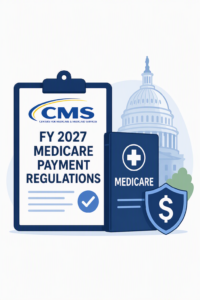 CMS has published its proposed physician fee schedule rule for 2027. Highlights include:
- A proposed reduction in Medicare physician rates.
- A reduction of payments for evaluation and management (E/M) visits during a global procedure period and the addition of an E/M visit complexity add-on.
- Changes in the HCPCS code G2211 used to bill for the complexity and cognitive load of providing longitudinal, relationship-based care and creation of a new code for advance care planning.
- Creation of shared coding for medical appointments that involve both complex conditions and behavioral needs.
- Numerous changes in the Medicare Shared Savings Program, in an effort to expand its use, by introducing more predictable spending targets, new financial incentives to participate, and more opportunities to share savings.
- A change in the input data for relative value units (RVUs) by removing the steps in the current methodology that rely on the indirect practice cost index from the calculation of the practice expense.
- A change in reimbursement practices for remote monitoring.
- A transition from traditional MIPS reporting toward MIPS Value Pathways (MVPs), with traditional MIPS reporting to end in 2029, and the addition of new MVPs for diabetes, hypertension, and hospital-based care.
- Mandatory reporting of prescription drugs purchased through the 340B program.
For additional information about the proposed rule, see the following resources:
- this CMS news release
- this CMS fact sheet on the proposed rule
- this CMS fact sheet on the Medicare Shared Savings Program aspects of the proposed rule
- this CMS fact sheet on the quality payment program aspects of the proposed rule
- the proposed regulation
 Department of Homeland Security – New Final Public Charge Rule
The Department of Homeland Security (DHS) has issued a final “public charge” rule that will give immigration officials broader discretion to evaluate an immigrant’s likelihood of becoming primarily dependent on the government and to reject their admission to the country based on those considerations.
Under current law, a “public charge” is someone primarily dependent on cash assistance for income maintenance or long-term institutionalization at government expense. The new final rule expands this, potentially weighing the future use of Medicaid, SNAP (food stamps), and federal housing assistance against applicants’ health conditions, age, education, and job skills. The final rule will eliminate the strict “bright line” tests of the current rule, giving officers more discretion to take a broader view of applicants’ finances, health, family size, and education.
The public charge test does not apply to U.S. citizens, most current green card holders, refugees, those who have been granted asylum, and those with humanitarian visas. Learn more from this pre-publication version of the final rule and this U.S. Citizenship and Immigration Services news release. The new rule will take effect on September 18. Changes in the public charge rule have implications for health care providers because in the past, many low-income immigrants and their families avoided applying for Medicaid and other government benefits out of fear of deportation.
Congress
 The House Ways and Means Committee passed seven health care-related bills focused on health care cost transparency, nursing homes, long-term acute-care hospitals (LTCHs), access to care in rural areas, and Medicare Advantage, including H.R. 3514, the “Improving Seniors’ Timely Access to Care of 2026.” All but one bill in the markup passed unanimously; only H.R. 9645, the “Health Care Price Certainty for All Americans Act,” passed along party lines. If enacted, the measure would expand health care price transparency requirements by requiring public disclosure of provider and insurer pricing data; require real-time patient cost estimates; increase penalties for non-compliance; and require C-suite executives to certify the accuracy of published prices.
-
- Members of Congress hope to pass legislation this year to make health care more affordable for consumers. Committees with jurisdiction over health care will continue focusing on bills that could ultimately be incorporated into FY 2027 appropriations legislation or other end-of-year measures.
- The House Budget Committee passed a $95 billion budget resolution to provide instructions for a third party-line budget reconciliation package. Neither the Ways and Means Committee nor the Energy and Commerce Committee received reconciliation instructions under the resolution so the package’s health care provisions only address fraud, waste, and abuse in entitlement programs. Speaker Johnson intends to bring the resolution up for a vote before the full House next week before a month-long recess. Find the House Budget Committee’s outline of the resolution here.
-
- As a reminder, the House and Senate must pass identical budget resolutions to begin the reconciliation process. If the House passes its resolution next week it will go to the Senate for possible consideration. If the House passes its resolution next week it will go to the Senate for consideration.
Centers for Medicare & Medicaid Services (CMS)
 CMS has posted a bulletin presenting the quarterly update of its Healthcare Common Procedure Coding System (HCPCS) codes used for home health consolidated billing enforcement. Find the bulletin here. The changes it presents take effect on October 1.
- CMS has posted a bulletin on reporting face-to-face Medicare encounters conducted by a hospice physician or hospice nurse practitioner for recertification via telecommunications technology on hospice claims. Find the bulletin here. The new requirements described in the bulletin take effect on January 4, 2027.
- CMS has sent an informational bulletin to state Medicaid and CHIP programs to remind them about their responsibility to redetermine a beneficiary’s eligibility for Medicaid or CHIP when the state becomes aware of changes in a beneficiary’s circumstances that may affect eligibility. Specifically, the memo addresses Department of Homeland Security terminations of parole programs for Cubans, Haitians, Nicaraguans, and Venezuelans and its implications for Medicaid and CHIP eligibility. Find that memo.
- CMS has published the third evaluation report of its ACO REACH (Realizing Equity, Access, and Community Health) Model. An analysis of the program found that in performance year 2023, the program reduced gross spending compared to other accountable care programs and individuals not currently in accountable care; net spending increased 0.8 percent, which was considered not statistically significant; and the program improved in quality measures such as days at home, timely follow-up after exacerbations of chronic conditions, emergency department visits, and ambulatory care-sensitive condition hospitalizations. Find the report and additional information about the model on the ACO REACH web page.
- CMS has sent a memo to state survey agencies introducing a new risk-based survey process that will enable states to expend fewer resources reviewing high-performing nursing homes – about 12 percent of all such facilities across the country. The new process will reduce the time and staff needed to conduct standard recertification surveys at sites that CMS classifies as higher-performing facilities. Learn more about this from this CMS news release and the agency’s memo to state survey agencies.
- CMS has issued a Request for Information (RFI) on Clinical Laboratory Improvement Amendments of 1988 (CLIA) regulations seeking input from the public on the following subjects: (a) breath testing; (b) laboratory processes and procedures; (c) emergency preparedness, biosafety and biosecurity, and cybersecurity; and (d) specialty testing areas. CMS, the CDC, interested parties, and state agency surveyors have identified these subjects as areas in which CLIA regulations may need to be updated to better reflect current knowledge and advancements in laboratory testing. Learn more about the RFI and the specific information CMS and the CDC seek from this CMS notice. The deadline for submitting comments is September 14.
- CMS has added the following item to its Quality Payment Program resource library. (Note: clicking these links may give a prompt to download a file that may be a zip file.)
Department of Health and Human Services (HHS)
 In April, President Trump issued Executive Order 14401, “Accelerating Medical Treatments for Serious Mental Illness,” which acknowledged that individuals suffering from serious mental illness may not always respond to existing therapies. Now, HHS’s Health Resources and Services Administration (HRSA) has issued a request for information (RFI) soliciting stakeholder feedback on training and care delivery models that could be used to ensure safe and effective delivery of potential future FDA-approved psychedelic drugs, including drugs administered in ambulatory clinic settings such as health centers and rural health clinics. In particular, HRSA is interested in ensuring that patients in medically underserved communities have access to these therapies, if approved, and requests stakeholder feedback on how psychedelics might be delivered. HRSA also requests input on workforce training in psychedelic care delivery. The RFI seeks detailed responses, including protocols, publications, data, and any other relevant materials. Learn more about HRSA’s objectives and the specific information it seeks from this HRSA notice. The deadline for submitting comments is August 13.
- In response to the same executive order, HHS and the Department of Veterans Affairs have entered into a memorandum of understanding to strengthen collaboration on the research, clinical development, and responsible deployment to veterans suffering from serious mental health conditions of potential future rapid-acting psychedelic drug products if approved by the FDA. Learn more about this agreement from this HHS news release.
- HRSA has announced the re-establishment of the National Advisory Committee on Rural Health and Human Services. The committee will advise the Secretary on issues affecting the delivery and financing of health care and human services in rural communities, with a continued focus on improving access to primary care, strengthening local health systems, supporting efforts to prevent chronic disease, and advancing better health outcomes for rural Americans. The committee will consist of up to 15 members appointed by Secretary Kennedy. Learn more about the committee, its composition, its past work, and its new assignment from this HHS news release and the National Advisory Committee on Rural Health and Human Services’ web page.
- Through its Small Health Care Provider Quality Improvement Program, HRSA will award up to $5 million in grants – approximately 20 grants of up to $250,000 – to strengthen the quality improvement culture in small rural health care facilities by building capacity to collect and use clinical data while implementing evidence-based approaches to improve health care quality with a particular focus on improving chronic disease outcomes. Learn more about the program, including eligibility criteria and how to apply, from this HRSA notice. The deadline for submitting applications is August 6.
- HHS and the departments of Labor and Treasury have released an updated FAQ to address the recertification of No Surprises Act-certified Independent Dispute Resolution (IDR) entities. Find the announcement of the release here and the updated FAQ here.
- HHS’s Office of the Inspector General (OIG) has issued a favorable advisory opinion regarding a federally qualified health center’s provision of produce boxes and produce vouchers to a group of patients who have been diagnosed with certain health conditions. Find that opinion here.
- The OIG has submitted its semi-annual report to Congress. Find that report here.
- HHS’s Administration for Strategic Preparedness and Response (ASPR) has released its public health emergency medical countermeasure enterprise multi-year budget for fiscal years 2025-2029. The budget outlines the resources needed to strengthen the nation’s medical countermeasure preparedness. Learn more from this ASPR news release and the budget document itself.
- President Trump has nominated Timothy Westlake, M.D., of Wisconsin, to be HHS’s Assistant Secretary for Mental Health and Substance Use and to head the Substance Abuse and Mental Health Services Administration (SAMHSA). Dr. Westlake currently serves as the agency’s chief of staff and is a board-certified emergency physician. At the state level, he chaired the Wisconsin Medical Examining Board and was a member of the Wisconsin Controlled Substances Board. He was the physician architect of Wisconsin’s prescription opioid reform strategy and served on the Governor’s Task Force on Opioid Abuse.
Medicaid State Plan Amendments
 CMS has approved state plan amendments for Medicaid and CHIP programs in the following states:
- Colorado – updating rates for 1915k services
- Delaware – addressing Recovery Audit Contractor (RAC) requirements
- Missouri – updating inpatient and DSH payments
- Nebraska – updating targeted case management for aged, blind, and disabled (ABD) and AFDC templates
- New Hampshire – adding doula service coverage
- Ohio – supplemental payments for government-owned or operated emergency medical service transportation services
- Oklahoma – addressing the Recovery Audit Contractor (RAC) program
- Pennsylvania – supplemental payments to certain county nursing facilities
State-Directed Medicaid Payments
CMS has approved the following state preprints for Medicaid state-directed payments.
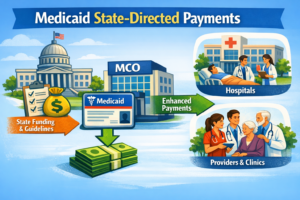 California, renewing rate increases for inpatient and outpatient services provided by private hospitals
- California, renewing a rate increase for dental services
- California, renewing a quality incentive program for skilled nursing facilities
- Florida, renewing a rate increase for professional services at an academic medical center
- Illinois, renewing a rate increase for inpatient labor and delivery services at safety-net hospitals
- Kansas, renewing a rate increase for inpatient and outpatient hospital services for critical access hospitals and general hospitals
- Kansas, renewing a rate increase for professional services at an academic medical center
- Maryland, renewing a rate increase and value-based payments for professional services at an academic medical center
- Massachusetts, renewing the maximum fee schedule for MassHealth contracted acute hospitals
- Massachusetts, renewing fee schedules for inpatient hospital discharges from freestanding pediatric hospitals
- Missouri, raising rates for professional services of designated providers affiliated with a qualifying hospital
- New Hampshire, renewing value-based payments for eligible community mental health centers
- New Jersey, renewing a rate increase for inpatient, outpatient, and behavioral health inpatient services provided by Camden County hospitals
- New Jersey, renewing rate increases for inpatient and outpatient hospital services provided by Monmouth County hospitals
- New Jersey, renewing rate increases for inpatient and outpatient hospital services provided by Burlington County hospitals
- New Jersey, renewing rate increases for inpatient and outpatient hospital services provided by Atlantic County hospitals
- New Jersey, renewing rate increases for inpatient and outpatient hospital services provided by Essex County hospitals
- New Jersey, renewing rate increases for inpatient and outpatient hospital services provided by Cumberland County hospitals
- New Jersey, renewing rate increases for inpatient and outpatient hospital services provided by Passaic County hospitals
- New Jersey, renewing rate increases for inpatient and outpatient hospital services provided by Hudson County hospitals
- New Jersey, renewing rate increases for inpatient and outpatient hospital services provided by Camden County hospitals
- Ohio, renewing value-based payments for qualified practitioners
- Oklahoma, renewing a rate increase for qualifying practitioners to support managed care quality assurance and access improvement initiatives
- North Carolina, renewing a minimum fee schedule for eligible non-state government-owned skilled nursing facility admission days
- Pennsylvania, renewing a minimum fee schedule for nursing facility services
- Rhode Island, renewing value-based payments for the state’s Patient Centered Medical Home Kids initiative
- Tennessee, raising rates for inpatient and outpatient hospital services
- Tennessee, raising rates for professional services at an academic medical center
- Tennessee, raising rates for nursing facility services
- Virginia, renewing quality payments for nursing facility services
- Virginia, renewing rate increases for professional services at an academic medical center, primary care services, and specialty physician services
- Virginia, renewing a rate increase for professional services at an academic medical center, primary care services, and specialty physician services for physicians employed by or contracted by a specific hospital system
- Virginia, establishing quality payments for nursing facility services
- Virginia, raising rates for nursing facility-like services for individuals under age 21
- Washington, renewing value-based pay for behavioral health provided by eligible mobile crisis response providers
 Health Policy Newsletters, Reports, and Videos
- CMS – MLN Connects – July 16
- CMS – Clinical Laboratory Fee Schedule Annual Laboratory Fee Schedule Annual Laboratory Meeting – four videos of June 1 meeting
- Government Accountability Office (GAO) – “Health Insurance Marketplaces: CMS Needs Stronger Controls to Prevent Unauthorized Actions by Agents and Brokers” – July 13 report
- HHS/Health Resources and Services Administration – HRSA Data Warehouse: Health Professional Shortage Areas Tutorial – a brief video tutorial (with transcript) on tools on the HRSA Data Warehouse site
- HHS – “This Week at HHS/OIG” – video – July 10
- CDC – Morbidity and Mortality Weekly Report (MMWR)
Centers for Disease Control and Prevention (CDC)
- T
 he CDC issued a health advisory regarding cases of domestically acquired cyclosporiasis, a gastrointestinal illness caused by the Cyclospora parasite. Since May 1, the CDC has identified 1,654 domestic cases, including 141 hospitalizations, with no reported deaths. The agency also noted that more than 5,100 additional reports are currently under review to determine whether they meet the official case definition. Additional information, including clinical guidance and recommendations for health care providers, is available here.
 - The CDC released new data indicating reduced health care-associated infections (HAIs) in hospitals across the U.S., although 518,000 cases still occurred in 2023. Pneumonia, surgical site infections, and gastrointestinal infections were the most common HAIs and 61 percent of such infections were not associated with medical devices or procedures. For more information see this CDC news release and the “HAI and Antimicrobial Use Prevalence Surveys.”
Medicaid and CHIP Payment and Access Commission (MACPAC)
MACPAC has published an issue brief titled “Access in Brief: Children’s Use of Behavioral Health Services” that examines disproportionate behavioral health conditions in children ages 12-17 enrolled in Medicaid or CHIP compared to children who are privately insured. For more information, see the issue brief here.
Stakeholder Events
 CMS – Hospital Outpatient Quality Reporting Program webinar – July 22
CMS’s eCQI Resource Center will hold a webinar titled “Review of Electronic Clinical Quality Measures” on Wednesday, July 22 at 2:00 (eastern). The webinar will address electronic clinical quality measure (eCQM) details, specifications, and logic and review scenarios for eCQMs, discuss Quality Reporting Document Architecture Category I requirements, submission deadlines, and more. Learn more about the webinar, available continuing education credits, and how to participate from this CMS notice. Registration is required.
CMS – 2026 National Provider Compliance Conference – August 11–12
On Tuesday, August 11 and Wednesday, August 12, CMS will hold a national provider compliance conference that will bring together Medicare Administrative Contractors (MACs) and Center for Program Integrity experts to provide compliance professionals with the information and tools they need to submit Medicare Part A, Part B, home health and hospice, and durable medical equipment claims. Learning opportunities will include individual presentations, Q&A segments, panel discussions, and a dedicated exhibit area for engagement between MACs and providers. The target audience for this conference is Medicare fee-for-service providers only, including medical review contractors, compliance officers, nurse and billing managers, medical record staff, coders, and provider associations. Go here to learn more about the conference and to register to participate. The conference will be held in Charlotte and will have no virtual component and a limited number of participants.
CMS – Advisory Panel on Hospital Outpatient Payment – August 24
CMS’s Advisory Panel on Hospital Outpatient Payment will meet virtually on Monday, August 24 at 9:30 (eastern). The purpose of this panel is to advise CMS on the clinical integrity of the Ambulatory Payment Classification groups and their associated weights, which are major elements of the Medicare hospital outpatient prospective payment system and the ambulatory surgical center payment system and supervision of hospital outpatient therapeutic services. Interested parties are invited to submit comment letters and presentations. Learn more about submitting such materials and how to participate in the meeting from this CMS notice.
MedPAC – Commissioners Meeting – September 3-4
MedPAC’s commissioners will hold their next public meeting virtually on Thursday, September 3 and Friday, September 4. An agenda for the meeting and information about how to participate has not yet been posted; when they are, they will be found here.
MACPAC – Commissioners Meeting – September 24-25
MACPAC’s commissioners will hold their next public meeting on Thursday, September 24 and Friday, September 25. An agenda for the meeting and information about how to participate has not yet been posted; when they are, they will be found here.