
Don’t Miss:
- CMS advises on “medical frailty” as qualification for Medicaid eligibility
- CMS unveils long-anticipated IDR Gateway
- Medicare ACCESS Model to expand
The following is the latest health policy news from the federal government for September 11-17. Some of the language used below is taken directly from government documents.
Congress
 The House Energy & Commerce Committee’s Health Subcommittee held a hearing to discuss bills seeking to modify certain physician payments under Medicare, to address cybersecurity in the health care system, and to expand seniors’ access to care. See the chairman’s opening statement here and find a list of witnesses and a full recording of the hearing here.
- The House Ways & Means Committee held a markup of various bills, including H.R. 4093, the “Apples to Apples Comparison Act of 2025.” Passed out of committee on party lines, the bill would require the HHS Secretary to publish and the Medicare Payment Advisory Commission (MedPAC) to analyze and report on information regarding expenditures under the Medicare program. It intends to provide consumers with data to help them decide between Medicare Advantage and Medicare fee-for-service for their health care coverage.
- Both the Senate Health, Education, Labor and Pensions Committee (HELP) and Finance Committee held confirmation hearings on Chris Klomp to be Deputy Secretary of HHS. He currently serves as Chief Counselor of HHS, Deputy Administrator of CMS, and Director of the Center for Medicare.
- The HELP Committee also considered Dr. Nicole Saphier to serve as Medical Director in the Regular Corps of the Public Health Service and Surgeon General of the Public Health Service and Dr. Timothy Westlake to serve as Assistant Secretary for Mental Health and Substance Use.
- The Finance Committee also considered Dr. Ge Bai to serve as Assistant Secretary of HHS.
See a recording of the HELP Committee hearing here and the Finance Committee hearing here and find the witness testimony from those hearings there as well. Neither committee has voted on whether to advance these nominees to the full Senate.
- The House recessed this week; the Senate is scheduled to remain in town until October 3. All of Congress is expected to convene after the midterm elections in November for a lame-duck session.
CMS: Guidance on Medical Frailty as Qualifying Condition for Medicaid Eligibility
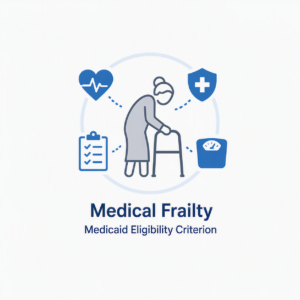 CMS has offered guidance to the states on how to identify “medical frailty” as a condition or circumstance that justifies approving or continuing Medicaid eligibility for those who do not participate in community engagement activities such as work or attending school or doing volunteer work. The law that created more stringent Medicaid eligibility criteria – last year’s budget reconciliation bill, H.R. 1 – did not define the medical frailty exception beyond the categories included in the enabling legislation: blind or disabled; a disabling mental disorder; or a physical, intellectual, or developmental disability that significantly impairs ability to perform one or more activity of daily living. Now, in new guidance, CMS has outlined how states may choose to define medical frailty through three tiers of medical circumstances that may, if they impair an individual’s ability to work, qualify a Medicaid applicant as medically frail and therefore eligible for Medicaid coverage.
- Tier 1 conditions are those in which the state can confirm that the individual’s ability to comply with the community engagement requirement is significantly impaired based on the information included in readily available ICD-10 code data.
- Tier 2 consists of conditions that may indicate an individual is medically frail but additional information is needed to determine if the condition significantly impairs the individual’s ability to comply with the community engagement requirement, such as by assessing severity or functional status through measures such as elevated acute care utilization, high-risk polypharmacy, use of certain durable medical equipment, or other factors indicating impairment, such as comorbidities, chronic conditions, and acute or temporary conditions like injuries or surgery.
- Tier 3 means there is insufficient or no information or data to assess medical frailty based on Tier 1 or Tier 2 criteria alone. This should trigger a manual review in which additional documentation may be required prior to deciding on exclusion.
CMS presents these tiers to the states for their consideration, noting that “States are not required to use this example tiered medical frailty framework.” The agency is not giving states flexibility to include populations beyond the categories included in the statute.
Learn more about the tiers from the CMS guidance document “Implementing Medical Frailty Under Community Engagement (Section 71119 of WFTC Legislation).”
No Surprises Act/Independent Dispute Resolution Developments
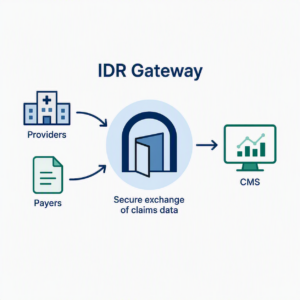 CMS has unveiled its “IDR [Independent Dispute Resolution] Gateway,” a new, centralized platform through which parties will transition from single-use web forms to a new approach that will provide a secure mechanism through which to manage disputes. IDR Gateway users will be able to start and respond to disputes; gain access to dispute dashboards and reports associated with their organization; track dispute information, including disputes assigned to a certified IDR entity; monitor assigned disputes by process phase; and review notifications regarding dispute activity. The IDR Gateway includes new security features, including identity verification processes and protocols. Learn more about the IDR Gateway and how providers and payers can sign up to use it from this CMS announcement and from the IDR Gateway web page.
- CMS has added a 17th organization to its group of Independent Dispute Resolution (IDR) entities that adjudicate No Surprises Act payment disagreements between providers and payers. Learn more about the newest IDR entity from this CMS announcement (scroll down to “September 11, 2026 – Certification of Additional Federal Independent Dispute Resolution (IDR) Entity).
Centers for Medicare & Medicaid Services (CMS)
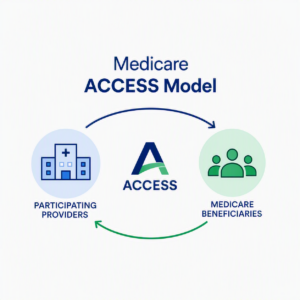 CMS is expanding the scope of its Advancing Chronic Care with Effective, Scalable Solutions (ACCESS) Model. The ACCESS Model, launched in July, is a 10-year voluntary Medicare program that tests outcome-aligned payments to expand technology-supported care and improve health outcomes for patients with chronic conditions. Currently the program serves patients with high blood pressure, obesity, diabetes, chronic kidney disease, chronic musculoskeletal pain, and depression, but in the spring of 2027 it will expand and offer such care to Medicare beneficiaries who suffer from heart failure, chronic obstructive pulmonary disease (COPD), substance use disorders, nicotine dependence, and bone, joint, and mobility conditions. Learn more about the program’s expansion from this CMS news release; from the ACCESS Model’s web page; and from this September 15 CMS video introducing the program’s expansion.
- CMS has posted a bulletin presenting FY 2027 inpatient prospective payment system and long-term-care hospital prospective payment system changes. The bulletin addresses rates and factors; changes in MS-DRGs; Medicare disproportionate share (Medicare DSH) uncompensated care payments; post-acute transfer and special payment policies; the Medicare area wage index and labor-related share; multi-campus hospitals; low-volume hospital criteria and payments; various Medicare quality programs; and more. Find that bulletin here. The changes it describes take effect on October 1.
- CMS has announced the annual adjustments in the amount in controversy (AIC) threshold amounts for administrative law judge (ALJ) hearings and judicial review under the Medicare appeals process. The adjustment to the AIC threshold amounts will be effective for requests for ALJ hearings and judicial review filed on or after January 1, 2027. The calendar year 2027 AIC threshold amounts are $200 for ALJ hearings and $2,000 for judicial review. Learn more from this CMS announcement.
- CMS has prohibited two Medicare Advantage Part D plans from enrolling new members because of violations of CMS requirements. Learn more about why CMS took these actions from the notices to the two plans; find those notices here and here.
- CMS is seeking permission to implement a new information collection program titled “Provider Experience of the Centers for Medicare & Medicaid Services (CMS) Quality Innovation Network-Quality Improvement Organization (QIN-QIO) Program.” The purpose of this information collection request is to gather survey data to support the program evaluation of the CMS QIN-QIO Quality Improvement program, which seeks to advance quality improvement efforts across health care settings by providing technical assistance to CMS-identified nursing homes, hospitals, and outpatient clinical practices, helping strengthen quality management infrastructure and improve health care quality and safety for Medicare beneficiaries. QIN-QIOs support providers and target populations by offering evidence-based, tailored quality improvement strategies that address a range of operational and performance challenges. Learn more about the information CMS proposes collecting, how it would be used, and the anticipated burden for providers to collect this information from this CMS notice. The deadline for submitting comments in response to the proposed data collection is November 13.
- CMS has sent a memo to state survey agencies revising recent correspondence with them about the transition of the Payroll-Based Journal system for skilled nursing facilities that transitioned into the Internet Quality Improvement & Evaluation System (iQIES) on August 17. Learn more from this CMS memo.
- CMS is inviting hospitals and health systems, EHR and health IT vendors, quality reporting vendors, FHIR (Fast Healthcare Interoperability Resources) implementers, and other interested organizations to participate in the HQR (Hospital Quality Reporting) End-to-End Submission testing track at the upcoming HL7 FHIR Connectathon, which will be held on September 19 and 20 in Rockville, MD. Learn more about the event and how to participate from this CMS notice.
- CMS has added the following items to its Quality Payment Program resource library:
Department of Health and Human Services (HHS)
 HRSA’s Rural Maternal Health Data Support program has established a web site that enables users to generate maternal health profiles of individual U.S. counties. Find that site here.
- HHS’s Office of Minority Health has launched the Data Resources and Integrated Visualization Ecosystem Dashboard (DRIVE), a user-friendly data visualization tool designed to help better understand non-medical drivers of health across populations and geographic locations. DRIVE integrates several measures from the U.S. Census Bureau’s American Community Survey across detailed race and ethnicity groups and presents data in five dashboards – education, housing, economics, language, and resources – that can be filtered by state or population to facilitate better understanding of the social determinants of health for different regions and groups. Learn more from this Office of Minority Health announcement and the DRIVE Dashboard web page.
- HHS and its Substance Abuse and Mental Health Services Administration (SAMHSA) have announced $500,000 in supplemental funding each for three states – Alabama, Kansas, and West Virginia – to strengthen the role of faith-based organizations and leaders in substance use prevention as part of their Strategic Prevention Framework–Partnerships for Success grants. Learn more about the grants and how they will be used from this HHS news release.
- HHS and its Agency for Healthcare Research and Quality (AHRQ) have appointed eight new members to the U.S. Preventive Services Task Force, which is volunteer panel of national experts in prevention and evidence-based medicine that works to improve the health of people nationwide by making evidence-based recommendations about clinical preventive services such as screenings, counseling, and preventive medications. Learn more about the task force and find the names of its new members in this HHS news release.
- HHS’s Office of the National Coordinator for Health Information Technology (ONC) has released USCDI (United States Core Data for Interoperability)+ Quality Version 2, which builds on USCDI+ Quality Version 1 and Draft USCDI+ Quality Version 2 and reflects public feedback, coordination with federal partners, alignment with USCDI and U.S. Core implementation guidance, and continued work to advance standardized data for digital quality measurement and reporting. Learn more about the release and its objectives and find links to the release and other resources in this ONC announcement.
Rural Health Transformation Program Funding
 In the past week CMS has announced that it has awarded Rural Health Transformation Program money to the following states:
- To Connecticut, $50 million to optimize care delivery and improve rural hospital infrastructure
- To Kansas, $17 million to adopt emerging health care technologies and improve patient transportation between facilities across rural parts of the state
- To Mississippi, $104 million to transform rural health care across the state through cutting-edge technology and expanded care closer to home
- To North Carolina, $1.25 million to expand preventive and behavioral health care access for students in rural areas of the state
- To South Carolina, $167 million to build rural care sites, upgrade health technology, and strengthen prevention
Medicaid State Plan Amendments
 CMS has approved state plan amendments for Medicaid and CHIP programs for the following states:
- Florida, making technical changes in portions of the state plan addressing inpatient services and Graduate Medical Education
- Illinois, to update the name of the grouping software the state uses and the frequency for updating that software
- New York, amending the state plan for state method on cost effectiveness and voluntary participation in employer-based group health plans
- Utah, updating the home health and personal care services fee schedule methodologies
- Washington, removing outdated references from the state plan
Health Policy Newsletters, Reports, and Videos
 CMS
CMS
- MLN Connects – September 17
- “CMS AHEAD Model Updates Webinar 2026” – video of a January webinar highlighting recent updates of the AHEAD Model
- “Geo AHEAD Participation Perspective (GAPP) Survey Office Hours” – video of an August 25 office hours to review Geo AHEAD, the accountable care organization (ACO) component of the AHEAD Model
- LTACH, IRF, IPF FY25 PEPPER Webinar – video of an August 25 educational overview of the long-term acute-care hospital, inpatient rehabilitation facility, and inpatient psychiatric facility PEPPERs, including guidance on navigating recent updates, including a review of the reports published in July and August of 2026
- HHS/Health Resources and Services Administration (HRSA)
- “Completing the National Health Service Corps (NHSC) Site Data Tables” – step-by-step guidance for completing the National Health Service Corps site data tables – video
- Organ Procurement and Transplantation Network – video of the August 20 meeting of the board of directors
- HHS/Office of the Inspector General (OIG)
- “This Week at OIG” video – September 11
- “Medicare Advantage Organizations and CMS Can Do More To Prevent Durable Medical Equipment Fraud in Medicare Advantage” – September 14 report
- Government Accountability Office (GAO)
- “Health Insurance Exchanges: Coverage of Non-Excepted Abortion Services by Qualified Health Plans in 2026” – September 15 report
- “Medicaid: Improved Oversight Needed of State Eligibility Error Corrective Action” – report released September 17
- CDC – Morbidity and Mortality Weekly Report (MMWR)
Food and Drug Administration (FDA)
The FDA announced the final design of the Expedited Investigational New Drug (IND) Pilot, which seeks to accelerate the time it takes from identifying a drug to initiating a first-in-human clinical trial by partnering drug companies with qualified research institutions that have scientific expertise to support efficient development of IND applications. The FDA will accept applications to participate in the pilot until October 30. For more information, see the press release here and the Expedited IND Pilot webpage here.
 Medicare Payment Advisory Commission (MedPAC)
MedPAC submitted a comment letter to CMS in response to CMS’s proposed rule with comment period on “CY 2027 Payment Policies Under the Physician Fee Schedule and Other Changes to Part B Payment and Coverage Policies; Medicare Shared Savings Program Requirements; and Medicare Prescription Drug Inflation Rebate Program.” MedPAC expressed its support for the policy included in the proposed rule to allocate indirect practice expense (PE) relative value units (RVUs) based on the sum of work RVUs and clinical labor PE RVUs for all services except 10- and 90-day global surgical codes; to eliminate the use of indirect practice cost indexes in the calculation of indirect PE RVUs; and to create a PE stabilization adjustment. MedPAC also expressed concern with CMS’s finding that at least 53 percent of the postoperative visits that Medicare pays for as part of 90-day global codes are not provided and that at least 83 percent of the postoperative visits that Medicare pays for as part of 10-day global codes are not provided. For more information, see MedPAC’s letter here.
Congressional Budget Office (CBO)
The CBO has named its panel of health advisors for the coming year. Learn more about the panel’s work and find a list of the appointed members in this CBO notice and learn more about their affiliations here.
Stakeholder Events
CMS – PEPPER Training for Home Health Agencies and Partial Hospitalization Programs – September 24
On Thursday, September 24 at 1:00 (eastern), CMS will hold a webinar to provide training for home health agencies and partial hospitalization program facilities on how to access, interpret, and use their latest PEPPER (Program for Evaluating Payment Patterns Electronic Report) report to support data-driven decision-making. Go here to register to participate.
 MACPAC – Commissioners Meeting – September 24-25
MACPAC’s commissioners will hold their next public meeting on Thursday, September 24 and Friday, September 25. An agenda for the meeting has not yet been posted; go here to register to participate.
CMS – Inpatient Rehabilitation Facility FY 2027 Final Rule Webinar – September 29
CMS will hold a webinar on Tuesday, September 29 at 1:00 (eastern) during which it will present a review of FY 2027 inpatient rehabilitation facility (IRF) prospective payment system final rule policies and related Medicare coverage updates. The session will summarize key payment updates and finalized IRF requirement changes, including the 36-hour requirement, initial interdisciplinary team meeting requirement, and related documentation considerations. Go here to learn more about the webinar and the subjects it will address and go here to register to participate.
CMS – PEPPER Training for Skilled Nursing Facilities – September 29
On Tuesday, September 29 at 1:00 (eastern), CMS will hold a webinar to provide training for skilled nursing facilities on how to access, interpret, and use their latest PEPPER (Program for Evaluating Payment Patterns Electronic Report) report to support data-driven decision-making. Go here to register to participate.
MedPAC – Commissioners Meeting – October 8-9
MedPAC’s commissioners will hold their next public meeting virtually on Thursday, October 8 and Friday, October 9. An agenda for the meeting and information about how to participate have not yet been posted; when they are, they will be found here.
CMS – Healthcare Common Procedure Coding System (HCPCS) Level II Public Meeting – November 11-12
CMS will hold its second biannual Healthcare Common Procedure Coding System (HCPCS) Level II public meeting of 2026 on Monday, November 2 and Tuesday, November 3 (if necessary) to discuss the CMS preliminary coding, Medicare benefit category, and Medicare payment determinations, if applicable, for new revisions to the HCPCS Level II code set for non-drug and non-biological items and services. Find the meeting’s agenda and learn more about how to speak at the conference, submit comments, and register to participate either virtually or in person in this CMS announcement.
CMS – 2026 CMS National Provider Enrollment Conference – November 18-19
CMS will hold a national provider enrollment conference on Wednesday, November 18 and Thursday, November 19 in Kissimmee, Florida. The event will provide direct access to the staff responsible for shaping and administering Medicare provider enrollment. Through keynote presentations, panel discussions, interactive Q&A sessions, and expert-led training, participants will gain insight into enrollment policy, program integrity initiatives, compliance requirements, operationally friendly best practices, and upcoming changes affecting the Medicare provider enrollment landscape. Learn more from this CMS conference notice.