
In late May, the Centers for Medicare & Medicaid Services proposed new restraints on state-directed Medicaid payments. In so doing, CMS was seeking to implement a mandate included in H.R. 1, last year’s federal budget reconciliation bill.
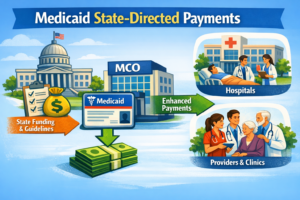 Since 2016, states have been requiring Medicaid managed care plans to supplement their regular payments to selected Medicaid providers, especially hospitals, as a means of ensuring access to certain medical services in communities where such services are otherwise scarce. States, in turn, have been drawing down federal Medicaid matching funds for those additional payments, increasing federal Medicaid spending.
Now, CMS is maintaining that pulling back on those state-directed payments will improve Medicaid’s fiscal integrity by preventing states from securing more federal funding for their Medicaid programs without a corresponding increase in state spending for those programs.
Some observers believe curtailing state-directed payments will reduce access to vital Medicaid-covered services in some communities while others believe cutting back state-directed Medicaid payments will improve Medicaid’s fiscal integrity and better tie Medicaid payments to Medicare rates.
Learn more about state-directed Medicaid payments, why Congress and now the administration want to limit them, and the potential implications for providers and their patients from the Health Affairs article “Proposed Rule Would Curtail Medicaid State Directed Payments.”