
 Don’t Miss:
- CMS charts new path for pursuing ACA premium tax credits
- CMS publishes timeline for implementation of Medicaid changes
- Court rejects narrow “medically frail” definition for exemption from Medicaid work requirement
- Inspector General elaborates on new CMS “power to exclude”
The following is the latest health policy news from the federal government for October 23-29. Some of the language used below is taken directly from government documents.
Congress
- The House Committee on Oversight and Government Reform announced an investigation into pharmacy benefit managers (PBMs). In letters to CVS Caremark, Express Scripts, and Optum Rx, Chairman James Comer (R-KY) raised concerns that independent pharmacies have experienced an unusual surge in burdensome audits and has requested documents, communications, and staff-level briefings about the PBMs’ audit practices, pharmacy selection processes, and nationwide audit totals and detailed records about audits of independent pharmacies in Kentucky, Mississippi, and Florida. For more information, including links to the chairman’s letters, see the press release here.
- Both chambers of Congress will reconvene on November 9 after the mid-term elections. Upon their return, one of their priorities will be advancing a government funding package because the current continuing resolution (CR) expires on December 11.
CMS Proposes New Path to Qualifying for Affordable Care Act Premium Tax Credits
 Seeking to implement changes adopted in the FY 2025 budget reconciliation law (also referred to as H.R. 1 and the “One Big Beautiful Budget Bill Act”) that govern eligibility for tax credits toward premiums for health insurance purchased on Affordable Care Act exchanges, CMS has proposed new processes for qualifying for those tax credits. Under the proposed rule, consumers seeking advance payment of the premium tax credit or income-based cost-sharing reductions must pass eligibility verification before receiving subsidies. The new exchange pre-eligibility verification process would require consumers seeking financial help through the exchanges to document their income, residency status, and other factors before receiving financial assistance beginning with 2028 health plans. CMS also proposes that currently enrolled consumers would only be re-enrolled in coverage with continuing financial assistance if they return to the exchange to confirm certain eligibility criteria annually and have it re-verified by the exchange; otherwise, they would automatically be re-enrolled without financial assistance. Learn more about the proposed process from this CMS news release, an accompanying fact sheet, and the proposed rule itself. The deadline for submitting comments about the proposed process is November 27.
In support of this approach, CMS has published a formal notice that it will employ a computer matching program between CMS and state-based entities to support eligibility determinations for enrollment in applicable state health subsidy programs under the Affordable Care Act, including Qualified Health Plans, Medicaid, CHIP, and Basic Health Programs. The matching program also will support implementation of statutory requirements concerning Medicaid community engagement and the prevention of concurrent Medicaid enrollment in more than one state. Learn more from this CMS announcement. The deadline for submitting comments is November 30.
The Courts
 A federal court in Boston has rejected CMS’s definition of “medically frail” as the agency has sought to define it for the purpose of determining Medicaid eligibility in light of passage of H.R. 1, the FY 2025 budget reconciliation law that introduced major changes in Medicaid’s eligibility criteria. The suit was brought by a coalition of 25 states and the District of Columbia. In the decision, the judge concluded that CMS’s definition of “medically frail” exceeded its statutory authority. Learn more from this news release from the California Department of Justice, one of the plaintiffs in the suit, and from the judge’s opinion in the case.
CMS Publishes Timeline for States’ Implementation of Medicaid and CHIP Changes
CMS has published a roadmap of various deadlines states must meet in their Medicaid and CHIP programs and other health care endeavors as a result of H.R. 1, the FY 2025 budget reconciliation law; implementation of the consolidated appropriations acts of 2024 and 2026; changes governing Medicaid provider taxes and health care interoperability; and more. The roadmap includes deadlines from 2026 through 2030. Learn more from CMS’s “Roadmap of Select Medicaid and CHIP Policy Implementation Dates.”
Proposed PBM Final Rule
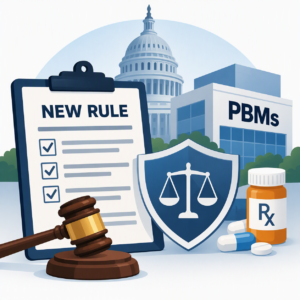 The Department of Labor will be issuing a final regulation that will require providers of pharmacy benefit management services (PBMs) and affiliated providers of brokerage and consulting services to disclose information about their compensation to fiduciaries of large, self-insured group health plans subject to the Employee Retirement Income Security Act (ERISA). Among the items PBMs will be required to disclose are pharmaceutical company rebates, financial arrangements with benefits consultants and group purchasing organizations, payments to brokers, rebates and fees received from entities other than plan sponsors, and incentives for placement of drugs in formularies.
These disclosure requirements apply for purposes of ERISA’s statutory prohibited transaction exemption for service arrangements under section 408(b)(2). The Labor Department believes these disclosures are needed so fiduciaries can assess the reasonableness of contracts or arrangements with these service providers, including the reasonableness of the service providers’ compensation. The department explains that it is issuing this rule to improve employer health plan transparency into the direct and indirect compensation received by pharmacy benefit managers. This final rule will affect sponsors and other fiduciaries of large, self-insured group health plans and certain service providers to such plans. Learn more from this Department Labor draft of the proposed rule it has submitted to the Office of the Federal Register but that has not yet officially been published. The 350-page final rule is to take effect 60 days after its official publication and would be applicable to plan years beginning on or after July 1, 2027.
Centers for Medicare & Medicaid Services (CMS)
 CMS has published its 2027 end-stage renal disease (ESRD) prospective payment system final rule. The rule increases the ESRD prospective payment system base rate to $297.52, an increase of about 2.7 percent. The final rule includes changes in the low-volume payment adjustment; changes in the payment adjustment for pediatric patients; an increase in the home and self-dialysis training add-on payment adjustment amount; modifications in the transitional drug add-on payment adjustment; and modifications of post-transitional drug add-on payment policies. The rule also includes updates of the acute kidney injury (AKI) dialysis payment rate and requirements for the ESRD Quality Incentive Program; routine annual updates of the ESRD wage index and outlier policies; an increase in the low-volume payment adjustment threshold; budget-neutral payment adjustments for pediatric patients; and an increase in the payment adjustment amount for home and self-dialysis training. Learn more about these and other changes introduced in the final rule from this CMS fact sheet and this preview version of the final rule.
- Last week, CMS announced that five companies had become eligible for recertification as Independent Dispute Resolution (IDR) entities – the organizations that preside over payment disputes between providers and insurers under the No Surprises Act. This week, CMS announced that three more companies have become eligible for recertification as IDR entities. Members of the public, providers, facilities, providers of air ambulance services, plans or issuers, and state regulators can petition for the denial of the certification of IDR entities. Learn more about the latest entities up for re-certification and how to submit a petition for the denial of an IDR entity’s certification or recertification from this CMS notice.
- CMS has announced that it will exercise enforcement discretion for the initial implementation of the mandatory interdisciplinary team meeting requirement for inpatient rehabilitation facilities through March 31, 2027. Under the FY 2027 Medicare inpatient rehabilitation prospective payment system final rule, the meetings are to be held on or before four days from the date patients are admitted to inpatient rehabilitation facilities, but now, the agency has announced that it will not enforce this requirement until the end of March of next year. Learn more about CMS’s decision to delay enforcement of this requirement for six months from this CMS notice.
- CMS has posted a bulletin presenting updates in Medicare inpatient rehabilitation facility documentation, therapy timing, and initial interdisciplinary team meetings. Find the bulletin here. The changes took effect on October 1 and the implementation date is November 17.
- CMS has posted a bulletin presenting updates in Medicare’s ambulatory surgery center payment system. The updates address new HCPCS codes, revised code descriptors, and ambulatory surgical center payments for surgical procedures, skin substitute products, non-opioid treatments for pain relief, and drugs, biologicals, and radiopharmaceuticals. Find the bulletin here. The changes it presents took effect on October 1.
- CMS has introduced a $275 million nationwide “Nurses for Nursing Homes” program through which nursing students and licensed nurses interested in working in a nursing home may qualify for up to $40,000 in student loan repayment and/or a $10,000 stipend in exchange for a three-year commitment to serve in a qualifying nursing home in a rural or higher labor-shortage area. The initiative is expected to support more than 4000 nurses nationwide. Funded by civil monetary penalties collected by CMS and states from nursing homes, the initiative will direct resources to licensed nurses and nursing students who provide hands-on care to nursing home residents. Learn more about the program, including the criteria for nurses to receive payments, from this CMS news release, this CMS FAQ, and the program’s web site.
- CMS has posted a bulletin presenting ICD-10 revisions and other coding revisions to National Coverage Determinations that will take effect on April 1, 2027. Find the bulletin here.
- CMS and its Center for Medicare and Medicaid Innovation are broadening the framework of their Cell and Gene Therapy Access Model beyond sickle cell disease to invite manufacturers of other cell and gene therapies to apply to participate in the model. Learn more about the agencies’ plans for the future of the program from this announcement and learn about the model from the program’s web page.
- CMS has sent a memo to state survey directors providing clarification regarding fine needle aspiration specimen adequacy assessment, rapid on-site evaluation, and workload limits. The memo updates guidance the agency provided in 2018. Find the CMS memo here.
Department of Health and Human Services (HHS)
 HHS’s Health Resources and Services Administration (HRSA) has asked OMB for permission to revise its “National Practitioner Data Bank for Adverse Information on Physicians and Other Health Care Practitioners” data collection instrument. The objective of this collection is to improve the quality of health care by encouraging entities such as hospitals, state licensing boards, professional societies, and other eligible entities providing health care services to identify and discipline those who engage in unprofessional behavior and to restrict the ability of incompetent health care practitioners, providers, or suppliers to move from state to state without disclosure or discovery of previous damaging or incompetent performance. It also serves as a fraud and abuse clearinghouse for the reporting and disclosure of certain final adverse actions taken against health care practitioners, providers, or suppliers by health plans, federal agencies, and state agencies. Learn more about the purpose of this data collection and the changes HRSA seeks and why it is seeking them from this HRSA notice. The deadline for submitting comments is November 23.
- HHS has posted a formal notice explaining that federal authorities will not take enforcement action against state-licensed pharmacies, federal facilities, or licensed physicians that compound certain peptide drug products even though those substances have not yet received formal FDA approval. The interim enforcement policy applies strictly to six specific peptide bulk drug substances: BPC-157, Epitalon, KPV, MOTS-c, Semax, and TB-500. This signifies that HHS and the FDA are choosing not to prosecute or penalize compounders using these six ingredients while the agency continues its formal rulemaking process to decide whether they should be permanently added to or excluded from its approved list. Learn more from this preview version of the HHS notice and the document “HHS Enforcement Discretion Policy Regarding 503A Compounding Using Certain Peptide Bulk Drug Substances.” The announcement includes no end date for non-enforcement of current requirements. HHS will accept comments “…until 2 weeks after date of publication in the Federal Register,” currently scheduled for October 30.
- HHS has announced that more than 250 hospitals have signed the “Make Hospital Food Healthier Pledge,” committing to serve more nutritious food, strengthen nutrition education, and make healthy eating a greater part of patient care. Participating hospitals commit to reviewing and aligning their food service practices with the federal dietary guidelines where clinically appropriate and feasible. The pledge also encourages hospitals to expand healthier choices for staff and visitors, equip patients with nutrition knowledge they can use after discharge, and support community nutrition programs. Learn more about the program and the pledge and find a link to a list of participating hospitals in this HHS news release.
- HHS’s Office of the National Coordinator for Health Information Technology (ONC) has published its “Health Data, Technology, and Interoperability: ONC Deregulatory Actions to Unleash Prosperity (HTI-5) Final Rule.” The HTI-5 final rule seeks to reduce administrative burdens for health IT developers participating in ONC’s health IT certification program and to release resources for health IT developers that can be applied to enhancing user experiences for patients and clinicians. In particular, it eases restrictions on the development of AI tools for use in electronic health records and clinical settings. Learn more about the HTI-5 final rule from this HHS news release, this ONC fact sheet, and the final rule itself.
- HHS and its Office of Women’s Health (OWH) will launch coordinated efforts with the Agency for Healthcare Research and Quality (AHRQ) and the organization DenseBreast-info.org to strengthen breast cancer screening, expand breast density education, and improve timely diagnostic follow-up, especially for midlife women. The OWH–AHRQ Breast Cancer Screening and Diagnostic Follow-up Initiative will analyze national screening and follow-up patterns while a collaborative of more than 40 health systems expands evidence-based practices and addresses delays in care. In addition, the three organizations will collaborate to expand access to evidence-based educational resources that improve breast density awareness, support informed discussions between women and their health care providers, and promote understanding of breast cancer screening and diagnostic follow-up options. Learn more about the program from this HHS news release.
- HHS’s Administration for Strategic Preparedness and Response (ASPR) is seeking applications for subject matter experts to serve on two federal advisory committees to help inform the nation’s public health and medical preparedness, response, and recovery: the National Biodefense Science Board and the National Advisory Committee on Children and Disasters. Learn more about the boards and their work and the backgrounds sought among prospective members from this ASPR news release and this ASPR web page with instructions on how to apply. The deadline for submitting nominations is November 22.
- HHS and its Administration for Community Living (ACL) have awarded 68 grants worth $35.8 million for research, technology development, training, and technical assistance that seeks to improve health, expand job opportunities, and support independent living and community life for people with disabilities. Learn more about the funding and find a list of the grant recipients in this HHS news release.
HHS/Office of the Inspector General
- In mid-October, HHS delegated to CMS the authority to exclude insurers, providers, and suppliers from federal health care programs such as Medicare and Medicaid; previously, only the OIG had this authority. Now, the OIG has published an FAQ addressing the extent of CMS’s new authority, how the authority of the two agencies differs, how they will coordinate their efforts, and more. Find that FAQ here.
- The OIG has published a favorable opinion about the solicitation and receipt of donations to subsidize the provision of services to certain financially needy Medicare- and Medicaid-eligible beneficiaries. Find that advisory opinion here.
Rural Health Transformation Program Funding
 In the past week CMS announced that it has awarded Rural Health Transformation Program money to the following states:
- California, $233 million to improve rural health care services across the state
- Florida, $193 million to expand preventive care and bring specialty care closer to rural parts of the state
- Georgia, $219 million to expand the rural health care workforce and advance technology-enabled care
- Idaho, $186 million to expand rural health care access, modernize technology, and grow the health care work force across rural parts of the state
- Texas, $87 million for 129 rural health care providers across the state
- Wyoming, $205 million to strengthen emergency care, expand the rural health workforce, and modernize health care technology in rural parts of the state
Medicaid State Plan Amendments
CMS has approved state plan amendments for Medicaid and CHIP programs for the following states:
- Arkansas, adding physician assistants and clinical nurse specialists to several Medicaid benefits
- Georgia, removing additional funding that established add-on payments for newborn deliveries in rural counties with a population between 35,001 and 50,000
- Illinois, adding licensed EMS personnel that provide treatment at the scene of an emergency
- Kansas, temporarily increasing rates for selected Complex Rehabilitative Technology (CRT) codes
- Massachusetts, updating payment methodologies for early intervention services
- Minnesota, removing an obsolete agreement from Minnesota’s state plan
- New Jersey, revising the distribution of Graduate Medical Education (GME) and Indirect Medical Education (IME) payments
- New York, extending the programs for two eligible pediatric residential health care facilities to operate as young adult residential health care facilities
- Ohio, updating the summary of an interagency agreement between the state’s Medicaid program and its Department of Developmental Disabilities
- Ohio, updating the summary of an interagency agreement between the state’s Medicaid program and its Department of Health
- South Carolina, updating the state plan to comply with a Consolidation Appropriations Act of 2023 provision facilitating community reintegration for incarcerated youth
- South Carolina, updating private and the non-state-owned governmental Medicaid nursing facility payment rates
- South Dakota, implementing an inflation increase for selected services and adding coverage and reimbursement for rural emergency hospitals
- Vermont, updating the provider qualification requirements for community-based mobile crisis services
- Virginia, removing references to the state/local hospitalization program
State-Directed Medicaid Payments
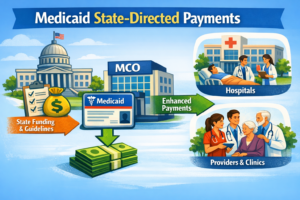 CMS has approved preprints for Medicaid state-directed payments for the following states:
- Arizona, renewing a rate increase for inpatient and outpatient hospital services for the state’s pediatric services initiative
- Arizona, renewing rate increases for inpatient and outpatient hospital services for the state’s safety-net services initiative
- California, introducing value-based payments for eligible primary care services
- California, renewing rate increases for eligible designated public hospital systems
- California, renewing a rate increase for inpatient and outpatient hospital services at eligible district hospitals
- Mississippi, renewing a rate increase for professional services at an academic medical center
- New Jersey, renewing a rate increase for professional services provided by qualified providers employed or contracted with a designated health system
- New Jersey, renewing the minimum fee schedule for professional services provided by qualified providers affiliated with schools of medicine or dentistry
- New York, renewing a population-based payment established by the state for Medicaid managed care enrollees attributed to eligible primary care providers with active New York State Patient Centered Medical Home recognition
- New York, renewing a rate increase for inpatient and outpatient services delivered by qualifying financially distressed hospitals
- New York, renewing a value-based payment arrangement for hospitals providing labor and delivery services
- New York, renewing a rate increase for critical access hospitals as established by the state for outpatient services
- Oklahoma, renewing a rate increase for professional services at an academic medical center
- Oklahoma, renewing a minimum fee schedule for professional services at an academic medical center
- Oklahoma, renewing a rate increase for eligible governmental ground ambulance transportation providers
- Oklahoma, renewing a rate increase for inpatient hospital services and outpatient hospital services
- South Carolina, renewing a rate increase for physicians providing professional services who are employed by or under contracts with the South Carolina public medical university, academic medical center or its component units or a South Carolina Area Health Education Consortium Teaching Health System
- South Carolina, renewing a rate increase for inpatient and outpatient hospital services
- Texas, renewing the state’s Comprehensive Hospital Increase Reimbursement Program
- Texas, amending aspects of the state’s Comprehensive Hospital Increase Reimbursement Program
- Texas, renewing the Texas Incentive Physicians and Professional Services program
- Texas, renewing a rate increase for rural health clinics for rural access to primary and preventive services
- Texas, amending the state’s Quality Improvement Payment Program
- Utah, establishing a minimum and maximum fee schedule for eligible behavioral health inpatient hospital services
- Washington, amending the state’s Medicaid plan to introduce a rate increase for hospitals owned and operated by or operated by a state university for inpatient and outpatient hospital services
- Washington, amending the state’s Medicaid plan to increase rates for qualified licensed professionals employed by the University of Washington and/or a member of its affiliated physician practice plans or employed by a public hospital or other public entity
Health Policy Newsletters, Reports, and Videos
 CMS – MLN Connects – October 29
- HHS/Health Resources and Services Administration (HRSA) – “HRSA Grand Rounds – Screening and Treatment of Pediatric Depression and Anxiety” – video of October 7 web event
- HHS/HRSA/Organ Procurement and Transplantation Network (OPTN) – video of October 9 OPTN executive committee meeting
- HHS/Office of the Assistant Secretary for Planning and Evaluation (ASPE) – “The U.S. Age-Adjusted Death Rate Reached a Record Low in 2025: What Drove the Decline?” – October 27 report
- HHS/Office of the Inspector General (OIG)
- “This Week at OIG” – October 23 video
- “Health Care Fraud and Abuse Control Program Report Fact Sheet (Fiscal Year 2025)” – October 28
- “Potential Vulnerabilities in CMS’s Oversight of Medicare Providers’ Billing of Selected Outpatient Drugs” – October 23 report
- “Annual Inflation Updates to the Annual Cap on Patient Engagement Tools and Supports Under 42 CFR § 1001.952(hh)” – October posting
- CDC – “What Clinicians Need to Know about Dengue in the United States” – video of October 22 webinar
- CDC – Morbidity and Mortality Weekly Report (MMWR)
- “Acute Kidney Injury Among Patients with Drug Overdose-Involved Hospitalizations – United States, 2016-2025” – October 22
- “Percentage* of Children and Adolescents Aged 5-17 Years Who Had Ever Received a Diagnosis of Attention-Deficit/Hyperactivity Disorder, by Sex and Year – United States, 2019-2025” – October 29
Centers for Disease Control and Prevention (CDC)
 The CDC has requested permission from the OMB to conduct a “National Tuberculosis (TB) Laboratory Services Survey,” the purpose of which is to conduct a comprehensive, national update of a prior TB laboratory services assessment of U.S. laboratories’ capacity, capabilities, and accessibility to deliver high-quality mycobacteriology diagnostic services. The survey would collect information on laboratory services, testing methods and volumes, specimen types, referral and reference testing practices, specimen handling and transport, reporting practices, training needs, proficiency testing and quality assurance. The project seeks to assess testing service offerings, volumes, methods, and referral practices and to identify gaps that impede timely, accurate TB diagnosis. Learn more about the proposed survey, its intended use, and the anticipated administrative burden from this CDC notice. The deadline for submitting comments is December 28.
- CDC Deputy Director and Chief Medical Officer Dr. Jennifer Shuford has resigned from the agency effective November 12. Satish Pillai, Ph.D., will fill both roles on an interim basis.
Food and Drug Administration (FDA)
- The FDA has issued draft guidance for industry to help sponsors develop and seek approval for personalized gene therapies designed to treat patients with rare genetic diseases. The guidance, titled “Individualized Human Genome Editing Products: Considerations for BLA Submission and Postapproval Management,” provides a regulatory framework for submitting and managing biologics license applications for individualized genome editing products and addresses manufacturing, safety testing, and product naming and labeling. Learn more from this HHS news release; this FDA video; the FDA document “A New Framework for Rare Disease Review;” the FDA’s formal notice about the draft guidance; and the draft guidance itself. There is no deadline for submitting comments about the draft guidance.
- The FDA has issued a proposed rule that would update infant formula nutrient requirements and change the units of measure for two nutrients. The agency also seeks public input on potential requirements for ingredients that are currently not required in infant formula but are commonly added by manufacturers. The proposed rule is the first of three the FDA anticipates adopting to address infant formula. Learn more from this preview version of the proposed rule. The deadline for submitting comments is February 26, 2027.
National Institutes of Health (NIH)
 The NIH has asked OMB for permission to revise its “Application Process for Clinical Research Training and Medical Education at the NIH Clinical Center and Its impact on Course and Training Program Enrollment and Effectiveness.” The primary objective of the application process is to enable the NIH’s Office of Clinical Research Training and Medical Education to evaluate applicants’ qualifications to determine their eligibility for training programs; a secondary objective of the application process is to track enrollment in training programs over time. The proposed changes focus on administrative updates, tracking, and evaluation rather than an overhaul of academic curricula. Learn more about the changes NIH seeks in this request to revise the current data collection instrument. The deadline for submitting comments is November 27.
Congressional Budget Office (CBO)
As requested by the House Budget Committee, the CBO has prepared an analysis of the potential cost to the federal government of H.R. 4464, the Preventive Health Savings Act. The bill proposes changing how the CBO calculates the long-term economic benefits of preventive health care. Find the CBO analysis here.
Justice Department (DOJ)
- The owner of a telemedicine company was sentenced to 20 years in prison for organizing and leading a $46.2 million Medicare fraud conspiracy that spanned more than six years, the DOJ announced. The defendant also was ordered to pay $17.9 million in restitution to Medicare and $10.4 million in forfeiture. Learn more from this DOJ news release.
- The DOJ announced that a federal grand jury in the Eastern District of Virginia returned an indictment on October 20 against a Virginia man for a $49 million mental health crisis services fraud scheme targeting Virginia Medicaid. Learn more from this DOJ news release.
Stakeholder Events
 MACPAC – Commissioners Meeting – October 30
MACPAC’s commissioners will hold the session of their current two-day meeting on Friday, October 30. Go here to register to participate and find the meeting’s agenda.
CMS – The Future of Quality Measurement – November 2
CMS will hold a webinar on the future of quality measurement on Monday, November 2 at 11:00 (eastern). Panelists will discuss trends, lessons learned, and emerging priorities shaping quality measurement this year and beyond. Learn more about the event, the panelists, and how to register to participate and submit questions in this CMS notice.
MedPAC – Commissioners Meeting – November 5-6
MedPAC’s commissioners will hold their next public meeting virtually on Thursday, November 5 and Friday, November 6. An agenda for the meeting and information about how to participate have not yet been posted; when they are, they will be found here.
CMS – Healthcare Advisory Committee Public Meeting – November 9
CMS’s Healthcare Advisory Committee will meet to provide recommendations to Secretary Kennedy and CMS Administrator Oz focused on improving Medicare, Medicaid, and the health insurance marketplace and the health care system more broadly in a manner consistent with the executive order “Establishing the President’s Make America Healthy Again Commission.” The meeting will take place on Monday, November 9, 2026 at 8:30 am (eastern). Go here for the meeting link and here for the meeting agenda.
CMS – Healthcare Common Procedure Coding System (HCPCS) Level II Public Meeting – November 11-12
CMS will hold its second biannual Healthcare Common Procedure Coding System (HCPCS) Level II public meeting of 2026 on Monday, November 2 and Tuesday, November 3 (if necessary) to discuss the CMS preliminary coding, Medicare benefit category, and Medicare payment determinations, if applicable, for new revisions to the HCPCS Level II code set for non-drug and non-biological items and services. Find the meeting’s agenda and learn more about how to speak at the conference, submit comments, and register to participate either virtually or in person in this CMS announcement.
CMS – 2026 CMS National Provider Enrollment Conference – November 18-19
CMS will hold a national provider enrollment conference on Wednesday, November 18 and Thursday, November 19 in Kissimmee, Florida. The event will provide direct access to the staff responsible for shaping and administering Medicare provider enrollment. Through keynote presentations, panel discussions, interactive Q&A sessions, and expert-led training, participants will gain insight into enrollment policy, program integrity initiatives, compliance requirements, operationally friendly best practices, and upcoming changes affecting the Medicare provider enrollment landscape. Learn more from this CMS conference notice.
HHS/Office of the Assistant Secretary for Planning and Evaluation – Physician-Focused Payment Model Technical Advisory Committee Meeting – December 8-9
HHS’s Physician-Focused Payment Model Technical Advisory Committee (PTAC) will hold a public meeting on Tuesday, December 8 and Wednesday, December 9 at 9:00 (eastern). An agenda has not yet been posted. Go here to learn more about the meeting and how to participate in person or virtually.