
Thirty-seven states face the loss of significant federal Medicaid revenue depending on how the Centers for Medicare & Medicaid Services ultimately implements a provision in the 2025 reconciliation bill that called for new limits on so-called state directed payments – Medicaid money the states direct to their Medicaid managed care plans with instructions on how to use that money.
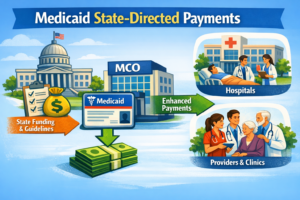 The 2025 law calls for nearly a trillion dollars in reduced federal Medicaid spending and $60 billion of that cut could result from new limits on state directed Medicaid payments to managed care organizations. Providers in eight states, led by California, would absorb half that cut.
In the past, states have used state directed payments to compel Medicaid managed care plans to pay enhanced Medicaid rates for services that are in especially short supply in underserved areas with large numbers of Medicaid patients. Until passage of the provision in the 2025 law, states were permitted to authorize payments up to the average of commercial rates, but under the new law, payments Medicaid cannot exceed Medicare payments in most states.
State Medicaid programs almost always pay less – much less – than Medicare rates.
Learn more about the challenges states – and their health care providers – face in the near future and ways they might compensate for those lost enhanced payments from the KFF report “37 States Face Cuts to Hospital State Directed Payments Under 2025 Reconciliation Law.”