
Don’t Miss:
- CMS proposes major downsizing of Medicare and Medicaid CoPs
- Providers face loss of hold-harmless protections in Medicaid managed care
- CMS awards 200 new medical residency slots
The following is the latest health policy news from the federal government for November 6-13. Some of the language used below is taken directly from government documents.
 Congress
- Lawmakers returned to Washington, D.C. to conclude the 119th Congress. Government funding will be a top priority during the lame-duck session, with the current continuing resolution (CR) set to expire on December 11. Appropriators have discussed another short-term CR, although the duration of any extension remains unclear. Alternatively, lawmakers could seek to complete certain FY 2027 appropriations through a minibus package. House Republicans are also discussing a potential third reconciliation package to address outstanding priorities; its viability will depend on member attendance, the level of support within the caucus, and whether Senate Republicans will agree to another party-line bill.
- House and Senate Republicans have completed their leadership elections for the 120th Congress, selecting Representative Jim Jordan (R-OH) to serve as House minority leader and Senator John Thune (R-SD) to lead Senate Republicans. Senate Democrats are scheduled to hold their leadership elections on December 1; Chris Van Hollen (D-MD) is challenging Chuck Schumer (D-NY) for the Senate majority leader role. House Democrats have not officially announced dates for their leadership elections, which are expected to take place sometime this month. The election for the new Speaker is scheduled for January 3, 2027, when the new Congress convenes.
- The Senate Health, Education, Labor and Pensions (HELP) Committee is scheduled to vote on Heidi Overton’s nomination to head the FDA on November 18. For additional information, see the press release here and view the confirmation vote here next Wednesday.
 The Courts
- Four states have sued to block implementation of new Medicaid work requirements. The states of Minnesota, New Mexico, Oregon, and Washington have filed a suit challenging the constitutionality of the Medicaid work requirements established in the FY 2025 budget reconciliation bill that also toughened Medicaid eligibility criteria, reduced access to Affordable Care Act advance premium tax credits, and created the Rural Health Transformation Program. Learn more from the states’ complaint.
- The freeze on ACA exchange brokers and agents has (at least temporarily) ended. A federal court has issued a stay of CMS’s freeze of the registration of new brokers and insurance agents seeking to work with prospective applicants on the federal health insurance exchange. The freeze was supposed to run until February 1. Find the court’s ruling here.
- Three biotech trade groups have challenged CMS’s GLOBE model, which is scheduled to begin on November 30. The Global Benchmark for Efficient Drug Pricing Model (GLOBE) will require the manufacturers of selected drugs paid for under Medicare Part B to pay rebates based on differences in the prices of those drugs in the U.S. and in selected other countries with economies similar to that of the U.S. The suit seeks to block the program’s implementation, arguing that GLOBE’s approach misuses a provision in the Affordable Care Act; does not affect how doctors provide care or how Medicare pays them and therefore exists solely to cut federal Medicare spending; violates the constitutional separation of powers and federal appropriations laws; and will reduce innovation in the development of new prescription drugs. Learn more from the litigants’ filing in the case. Another group filed a similar challenge to the GLOBE model in October; find that suit here.
CMS Proposes Major Changes of Medicare and Medicaid Conditions of Participation
 CMS has proposed a major downsizing of Medicare and Medicaid CoPs. The rule is large in scope, addressing 21 provider types in ways that CMS estimates will cut $320 million in annual regulatory expenditures and administrative burden while returning roughly 3.26 million hours of staff time back to health care workers. It proposes doing so by revising, streamlining, or eliminating specific regulations contained in Medicare’s and Medicaid’s Conditions of Participation (CoPs), Conditions for Coverage (CfCs), and Requirements for Participation (RFPs).
The proposed rule removes specific staff training mandates for transfer protocols, emergency services readiness, and obstetric care; establishes new patient rights standards for birth tissue collection; clarifies and expands critical access hospital distance eligibility rules and statutory exemptions; and eliminates rules requiring patient care areas to have natural light and ventilation through exterior windows/doors. For long-term and intermediate-care facilities, it eliminates weekly federal respiratory illness data reporting outside of active public health emergencies, streamlines certain COVID-19 vaccination policies, modifies state ombudsman notifications for resident transfers, and revises direct-care staff involvement in facility assessments.
The proposed rule also rescinds certain Medicaid institutional payment transparency reporting metrics, such as tracking the exact percentage of Medicaid payments dedicated to direct-care workers and support staff compensation in nursing and intermediate-care facilities.
Learn more about the proposed rule from this CMS fact sheet and the proposed rule. The deadline for submitting comments is January 11.
 Medicare Drug Price Negotiation Program Final Rule
CMS has finalized guidelines for implementation of the Medicare Drug Price Negotiation Program for initial price applicability for 2029 and beyond. The program was created in 2022 by the Inflation Reduction Act to enable CMS to negotiate directly with drug manufacturers for high-cost medicines covered under Medicare’s Part B and Part D programs, and under this final rule CMS will publish a list of selected drugs for negotiation and for renegotiation, if any; enter into agreements with manufacturers of selected drugs that choose to participate; negotiate (or renegotiate) maximum fair prices for these selected drugs; publish any agreed-upon maximum fair prices for selected drugs; and impose civil monetary penalties when appropriate. CMS will select up to 20 drugs covered under Part D and/or payable under Part B for initial price applicability year 2029 and for each subsequent initial price applicability year. Learn more about these and other aspects of the final rule from this CMS news release; this CMS fact sheet; the program’s web page; a timeline for the implementation of this rule; and the final rule itself, which takes effect on December 5.
 Centers for Medicare & Medicaid Services (CMS)
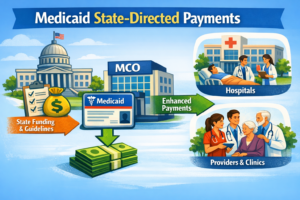
- Providers receiving state directed payments through Medicaid managed care would need to attest that they do not participate in any prohibited hold-harmless arrangements under a proposed, revised CMS data collection request. This is part of the broader federal effort to limit the use of state-directed payments in Medicaid managed care by preventing states from taxing providers while assuring those same providers that they will be held harmless for the taxes they pay. Other aspects of the proposed update of this rule remain largely unchanged. Learn more from this formal notice. The deadline for submitting comments is January 11.
- CMS has awarded 200 new medical residency slots for 99 teaching hospitals in 31 states. The slots are the last of 1000 new slots created by Congress under the Consolidated Appropriations Act of 2021. Find a list of the new medical residency slots here.
- CMS has extended its moratorium on the enrollment of new Medicare hospices and home health agencies for another six months. The current six-month moratorium was to end on November 13. Learn more about the moratorium and why the agency initiated and then renewed it from this CMS news release, this formal notice of the hospice moratorium extension, and this formal notice of the home health agency moratorium extension.
- CMS and ONC will launch testing of electronic prior authorization. The agencies have announced a series of testing events that will bring together payers, providers, hospitals, electronic health record (EHR) developers, intermediaries, and other industry partners with CMS and the Office of the National Coordinator for Health Information Technology (ONC) to test their workflows across connected systems and identify gaps in electronic prior authorization before broader implementation. Learn more about the agencies’ plans from this announcement and an accompanying ONC blog commentary. Organizations interested in participating should convey that interest by November 20.
- CMS will create a technical experts panel to help guide development of an alternative wage index methodology for Medicare’s inpatient psychiatric facility prospective payment system. The agency has hired a contractor to develop such an alternative and is recruiting a technical expert panel to help with that project, seeking individuals with expertise in inpatient psychiatric facility operations and finance, psychiatric workforce and compensation practices, or Medicare wage index policy. The panel will meet virtually in mid-January 2027. Learn more about the panel and its anticipated work from this CMS notice, which includes information about how to submit nominations to participate in this effort. The deadline for submitting nominations is November 30.
- CMS has posted the January 2027 release of the Medicare home health grouper software. Find the new grouper by going here and scrolling down to “downloads” for a direct download of a zip file and go here for an FAQ on the grouper’s use.
- CMS has added the following items to its Quality Payment Program resource library. (Note: clicking some of these links will download a zip file.)
 Department of Health and Human Services (HHS)
- HRSA’s Organ Procurement and Transplantation Network has introduced two new policies to govern transplants. The new policies are designed to strengthen patient safety, protect patients who may become deceased organ donors and those who may receive organ transplants, and improve the donation experience for donor families. The new policies strengthen safety, authorization, disclosure, communication, and accountability standards for a technique that seeks to preserve organ life after a donating patient’s circulatory death; require reporting of procedure details and safety events; and establish a rabies screening policy designed to reduce the risk of donor-derived rabies transmission. Learn more about the new policies from this HRSA news release; the new Normothermic Regional Perfusion Policy, which addresses the technique for preserving organs after a donating patient’s death; and the new rabies screening policy.
- Enhanced preventive services for women will be the subject of funding to be awarded by HRSA as part of the agency’s Women’s Initiative for Screening and Health program. The purpose of the funding is to establish a multidisciplinary coalition to update the HRSA-supported women’s preventive services guidelines. The funding will support a recipient that will convene a multidisciplinary panel; conduct evidence reviews; and develop and disseminate information on the guidelines tailored to communities with limited resources. Learn more from this HHS news release; HRSA’s Women’s Preventive Services Guidelines web page; and this notice describing the funding opportunity, which includes information about eligibility criteria and how to apply for the one grant of up to $1 million. The deadline for submitting applications is January 7.
- New grants intended to help older adults achieve greater safety, more independent decision-making, and improved connection to their communities have been awarded by HHS and its Administration for Community Living. The $9.7 million in funding will test new ways of preventing elder abuse, neglect, and financial exploitation; expand legal help; strengthen advocacy for people living in nursing homes and other care facilities; and help women with the greatest economic and social need learn more about personal finances. Learn more about the HHS funding and the programs it will support and find a list of grant recipients in this HHS news release.
- HHS’s Office of the Inspector General has issued a favorable opinion about a program to sponsor auto-antibody testing for eligible patients to determine whether it may be appropriate to prescribe a certain drug manufactured by a pharmaceutical manufacturer. Find that opinion here.
 Rural Health Transformation Program Funding
All 50 states will share $10 billion in 2027 for rural health care under funding released by CMS under the Rural Health Transformation Program. Established by the FY 2025 budget reconciliation act, the Rural Health Transformation Program is to provide $50 billion over five years to help states improve access to care, quality, and outcomes in rural communities; this is the second of the program’s five years of funding for the states. The program focuses on sustainable access to care, workforce development, innovative care, and innovation in technology. Learn more about how CMS makes its funding decisions, how it evaluates what states do with this funding, and how the amount individual states receive over the program’s next three years might change based on the actions they take and the results they produce from this CMS fact sheet; about how much money each state received from this CMS news release; and about the program in general from the Rural Health Transformation Program’s web page.
Medicaid State Plan Amendments
 CMS has approved state plan amendments for Medicaid and CHIP programs for the following states:
- Arizona, updating the state’s Inpatient Differential Adjusted Payment Program for FY 2026
- California, updating the state’s FY 2027 DRG payment parameters for certain types of acute-care and critical access hospitals
- Florida, updating the state’s outpatient hospital reimbursement methodology
- Florida, updating the state’s prospective payment system, changing calculations in process and outcome measures, and removing the hold harmless rate
- Maine, updating the payment methodology for outpatient hospital services
- Maine, updating the payment methodology for certain rehabilitative services
- Maine, updating the payment methodology for certain rehabilitative services
- Minnesota, authorizing non-IV-E foster care children under age 21 who were placed by other states in a Minnesota family foster home to have access to Minnesota Medicaid
- Montana, implementing the Social Security Act’s community engagement requirements
- Texas, updating the Medicaid family planning services fee schedule
- Wyoming, implementing a patient-driven payment methodology for nursing facilities, updating rate-setting and communication procedures, and clarifying provider requirements
Medicaid State Waiver Approvals
CMS has approved state Medicaid waivers for:
- Kansas, approval of a 1915(c) technology assistance waiver
- Michigan, approval of a 1915 (c) waiver for the Michigan Choice Program
 State-Directed Medicaid Payments
CMS has approved preprints for Medicaid state-directed payments for the following states:
- Arizona, renewing a uniform increase for primary care, behavioral health outpatient, and justice-involved clinic services
- Colorado, renewing a uniform increase for professional services at an academic medical center
- Michigan, renewing a uniform dollar increase for selected direct care workers that provide home- and community-based waiver services
- Missouri, approving quality payment/pay for performance for inpatient and outpatient hospital services
- New Jersey, renewing a perinatal episode-of-care pilot
- New Jersey, renewing a minimum fee schedule for facilities authorized by several manufacturers to administer specified therapies
- Pennsylvania, renewing a uniform dollar amount for organizations that provide private duty nursing to members under age 21
- Pennsylvania, renewing a minimum fee schedule for integrated community wellness centers
- Pennsylvania, renewing a uniform percentage increase for dental services
- South Carolina, renewing an increase for emergency medical transport services provided by ground non-governmental ambulance services providers
- Virginia, amending the uniform percentage increase for nursing facility-like services for individuals under age 21
- West Virginia, renewing a uniform increase for selected acute-care hospitals for specialty physician services
 Health Policy Newsletters, Reports, and Videos
- CMS – MLN Connects – November 12
- CMS/Center for Medicare and Medicaid Innovation (CMMI) – “First Cross-State Evaluation of the Medicare-Medicaid Financial Alignment Initiative: Results on Capitated Demonstrations in Eight States Through 2022” – November report
- CMS/CMMI – “CMMI Evaluation Digest” – October edition – evaluations of CMMI’s ACO Reach model, Independence at Home demonstration, and Value in Opioid Use Disorder Treatment demonstration
- CMS/CMMI – “Innovation Insight: CMS Broadens Access to Diabetes Prevention through New Digital Provider Collaborative” – November 12
- HHS/Administration for Strategic Preparedness and Response – “The Express” (newsletter) – November
- HHS/Office of the National Coordinator for Health Information Technology – “HTI 5 Final Rule Information Session” – video of October 30 webinar
- HHS/HRSA – “OPTN [Organ Procurement and Transplantation Network] Bulletin” – November 4
- HHS/Office of the Inspector General (OIG) – “CMS’s Oversight of Medicare Administrative Contractors’ Cost Report Settlement Processes Was Not Adequate To Identify Settlements That Contained Obvious Errors and That Had Inadequate Supervisory Review” – November report
- HHS/Office of the Inspector General (OIG) – “This Week at OIG” – November 6 video
- CDC – Morbidity and Mortality Weekly Report (MMWR) – “Use of Glucagon-Like Peptide-1 Medications and Modified Medication Use Among Adults – United States, 2025” – November 12
- Government Accountability Office (GAO) – “Opioid Overdose Reversal Medications: Medicare and Medicaid Enrollees Generally Had Coverage in Selected Recent Years” – November 9 report
- Congressional Research Service – “Healthy Start: Overview and Policy Considerations” – November 10 report
 Centers for Disease Control and Prevention (CDC)
- The CDC seeks to update its Overdose Response Strategy Data Collection. The changes the CDC seeks reflect updated program goals and evaluation planning and continues to gather data from Overdose Response Strategy teams and public health/public safety partners but calls for updated instruments that are redesigned to better assess partnership effectiveness, inform technical assistance, and shape guidance documents produced by the CDC. Learn more from the CDC’s request for permission from OMB to introduce these changes. This request has already passed through a review and comment period and the CDC has extended the comment period for another 30 days, until December 7.
- The CDC wants to update its National Survey of Syringe Services Programs, which seeks to strengthen and improve the agency’s ability, and that of its local and state partners, to monitor and evaluate syringe services programs nationally, with the overall goal of supporting, sustaining, and improving syringe services programs and reducing infectious disease and other harms related to drug use. The proposed changes the CDC seeks from OMB include an update of the survey’s scope and content; expanded services and overdose data; an increase in the target sample size to all syringe services programs; and new options for completing and submitting the data collection. Learn more from this proposed update of the National Survey of Syringe Services Programs. This request has already passed through a review and comment period and the CDC has extended the comment period for another 30 days, until December 7.
 Medicare Payment Advisory Commission (MedPAC)
MedPAC met last week in Washington, D.C. During the commission’s deliberations, members and staff addressed the following issues:
- recent changes in the Medicare physician fee schedule that affect primary care
- charge-based coinsurance at rural health clinics
- analysis of aberrant patterns of care among hospice and home health providers
- findings from MedPAC’s focus groups with Medicare beneficiaries and physicians, nurse practitioners, and pharmacists
- Medicare eligibility notification and the State Health Insurance Assistance Program operations and funding
Go here to find brief statements on each issue, the key points, and action items; to find links to the staff presentation for each issue; and for a transcript of the two-day session.
Stakeholder Events
 CMS – Center for Clinical Standards and Quality – Quarterly Stakeholder Webinar – November 17
CMS’s Center for Clinical Standards and Quality will hold its quarterly stakeholder webinar on Tuesday, November 17 at 3:00 (eastern). During the webinar, agency officials will discuss recent policy efforts and their efforts to improve care and outcomes for beneficiaries in Medicare, Medicaid, and the Marketplace. Go here to register to participate.
CMS – Digital Quality Measurement in Action – November 18
CMS will hold the webinar “Digital Measurement in Action” to share information on how organizations are using interoperable data, Fast Healthcare Interoperability Resources (FHIR®), and partnerships to advance digital quality measurement. The webinar will be held on Wednesday, November 18 at 1:00 (eastern). Learn more about the scope of the webinar, the presenters, and how to register to participate from this CMS announcement.
CMS – 2026 CMS National Provider Enrollment Conference – November 18-19
CMS will hold a national provider enrollment conference on Wednesday, November 18 and Thursday, November 19 in Kissimmee, Florida. The event will provide direct access to the staff responsible for shaping and administering Medicare provider enrollment. Through keynote presentations, panel discussions, interactive Q&A sessions, and expert-led training, participants will gain insight into enrollment policy, program integrity initiatives, compliance requirements, operationally friendly best practices, and upcoming changes affecting the Medicare provider enrollment landscape. Learn more from this CMS conference notice.
HHS/Office of the Assistant Secretary for Planning and Evaluation – Meeting of the Physician-Focused Payment Model Technical Advisory Committee – December 8
The Physician-Focused Payment Model Technical Advisory Committee of HHS’s Office of the Assistant Secretary for Planning and Evaluation (ASPE) will hold a public meeting on Tuesday, December 8 at 8:30 (eastern) to discuss and vote on the physician-focused payment model proposal “Episode Intelligence Authorization and Payment (EIA) Compensation Model (Revised Version).” Go here for information on how to register and participate and for the meeting’s agenda.
MedPAC – Commissioners Meeting – December 10-11
MedPAC’s commissioners will hold their next public meeting virtually on Thursday, December 10 and Friday, December 11. An agenda for the meeting and information about how to participate have not yet been posted; when they are, they will be found here.
MACPAC – Commissioners Meeting – December 10-11
MACPAC’s commissioners will hold their next public meeting on Thursday, December 10 and Friday, December 11. An agenda for the meeting and information about how to participate have not yet been posted; when they are, they will be posted here.
HHS/Office of the National Coordinator for Health Information Technology – Annual Conference – February 3-4
HHS’s Office of the National Coordinator for Health Information Technology (ONC) will hold its annual conference on February 3 and 4 in Washington, D.C. In addition to participating in person, individuals can view livestreams of the session. Go here for the meeting’s agenda, to register, and for information about accommodations.